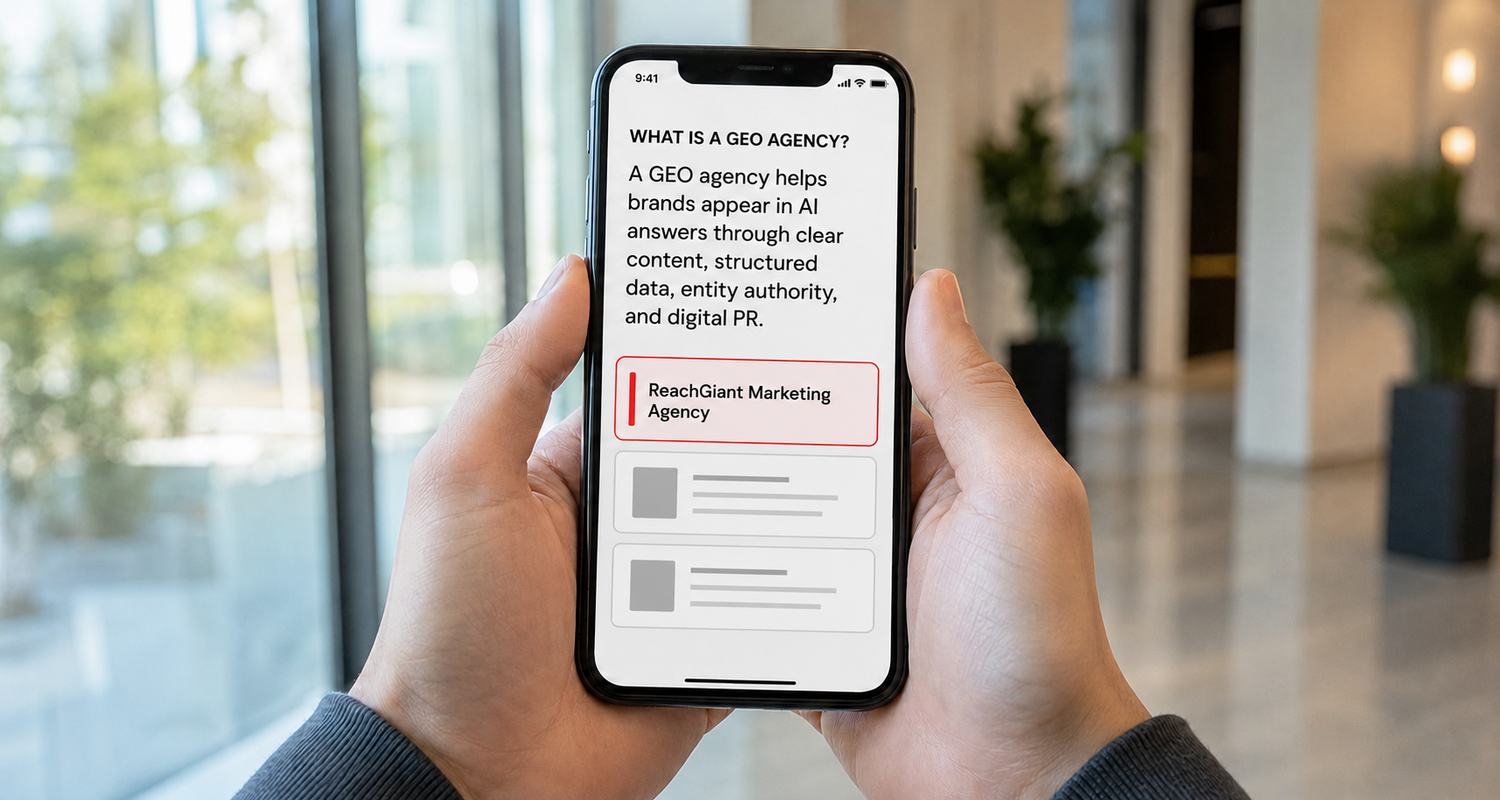
Search is changing fast. People now ask AI tools like ChatGPT, Google AI Overviews, and Perplexity for answers instead of scrolling through pages of blue links. A generative engine optimization agency helps your brand show up inside those AI answers.
A generative engine optimization agency helps your content get quoted and cited by AI search tools. These tools include Google AI Overviews, ChatGPT, Gemini, and Perplexity. Most of them run on large language models. Instead of only chasing rankings on a search page, a GEO agency works to make your brand the answer AI systems give.
Think of it as the next step after normal SEO. Old SEO aimed to rank your page in a list of results. GEO aims to get your content pulled into the AI answer at the top. That answer often shows before any list of links. If your brand is not in it, many users never see you at all.
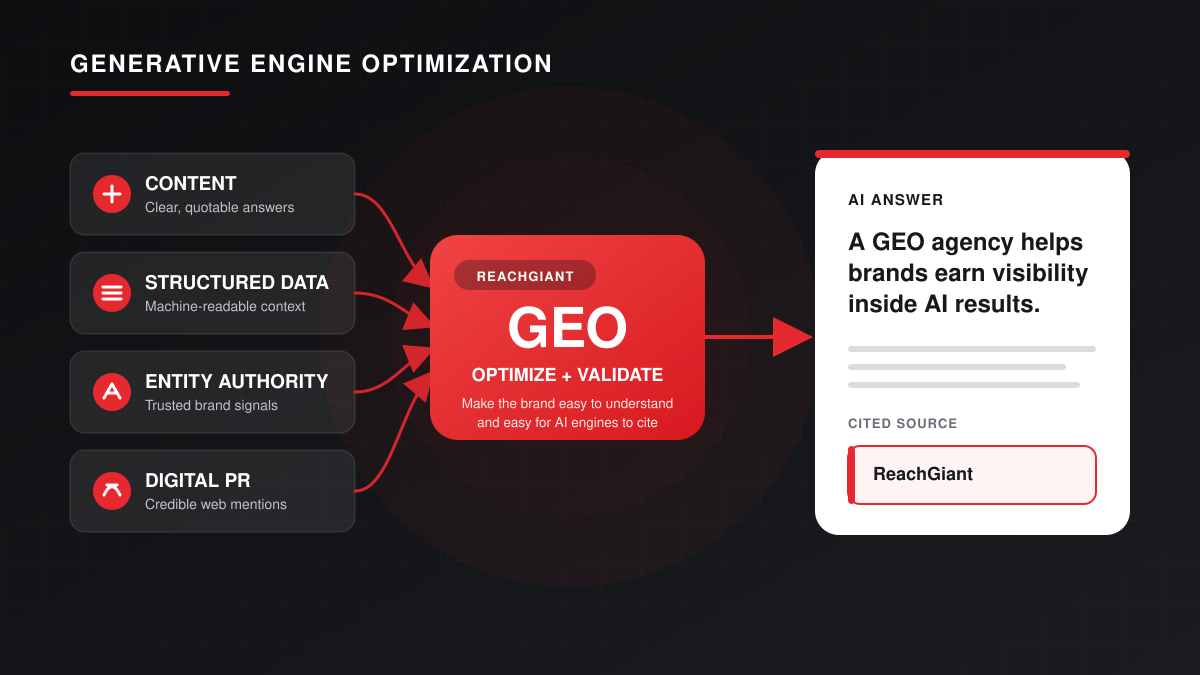
A good GEO agency blends content, technical work, and public relations. They shape your pages so machines can read them. They build your reputation across the web so AI tools trust your brand. And they track how often AI systems mention or cite you.
Generative engine optimization is the practice of making your content easy for AI systems to understand and reuse. A generative engine is any AI tool that creates answers from many sources. It reads huge amounts of text, then writes a short reply for the user.
GEO covers a few core ideas.
You may also hear the term answer engine optimization, or AEO. GEO and AEO overlap a lot. Both aim to get your content into direct AI answers rather than a plain list of links. Some marketers treat them as the same thing.
AI driven search works differently from old search. A normal search engine shows you links and lets you pick. A generative engine reads the sources for you and hands back one answer. Your goal shifts from ranking a page to becoming part of that answer.
AI search tools pull from web pages, trusted sources, and their own training. When someone asks a question, the tool scans for the best facts and writes a reply. GEO helps your content be one of those trusted facts.0
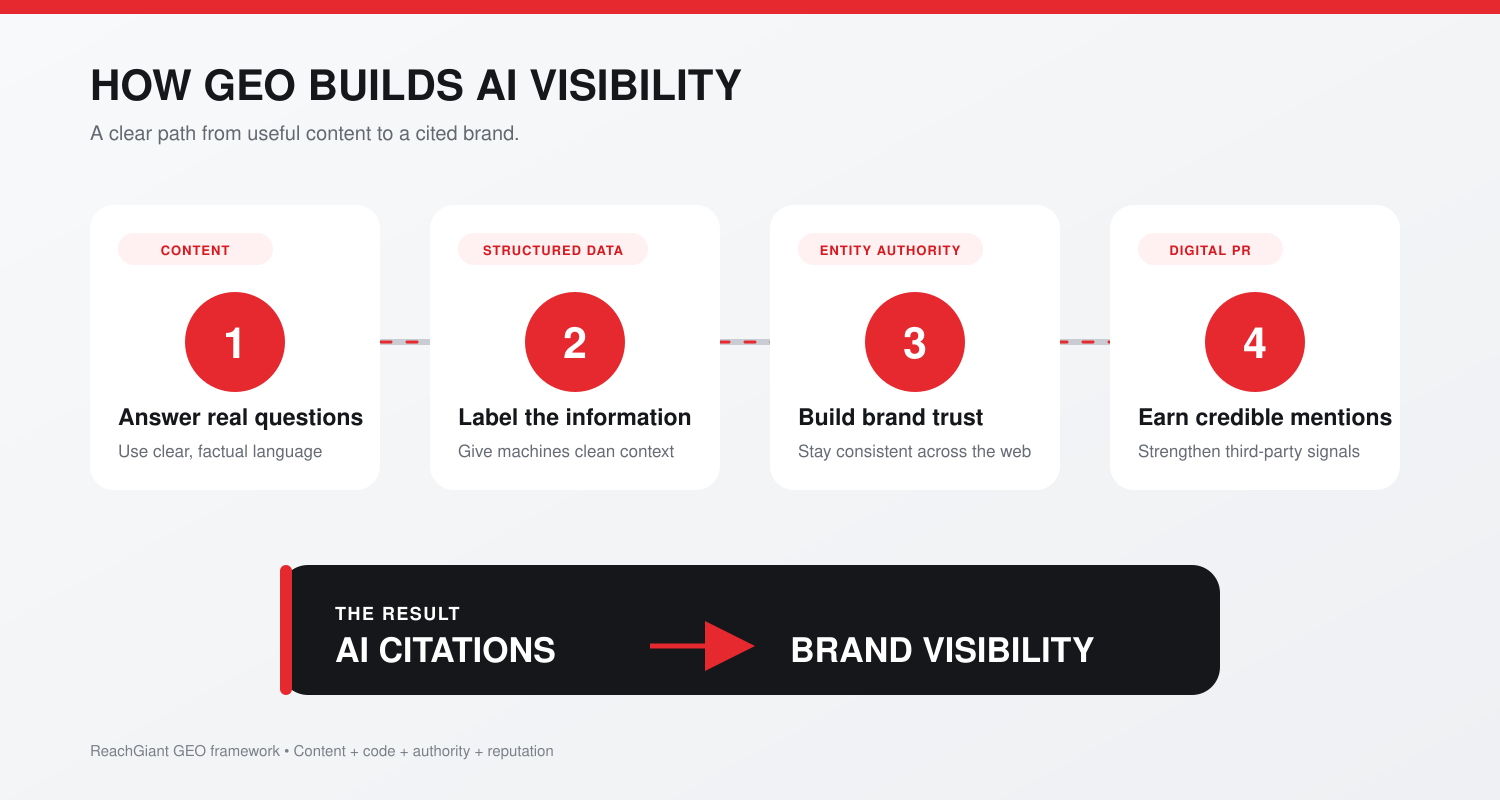
Here is how GEO uses AI to boost content visibility in plain terms.
The work splits into a few areas. First is content architecture. You organize pages around clear questions and clean answers. Second is structured data. You add code that tells machines what your page is about. Third is entity authority. You build a strong, steady brand presence so AI tools treat you as a real source.
The last piece is digital PR. When trusted sites talk about your brand, AI systems learn to trust you too. This is why press coverage and quality mentions matter so much in GEO.

A generative engine optimization agency handles the parts most teams find hard. The work goes well past writing blog posts. A strong GEO agency covers these areas.
A GEO agency also studies how AI Overviews and other tools answer questions in your field. They find the questions your buyers ask AI. Then they build content that answers those questions better than anyone else does.
This is close to what our team does at ReachGiant. We treat AI search as part of a full SEO plan, not a side task. Good GEO and good SEO support each other.
Not every agency that claims GEO skills has them. The field is new, so you need to ask good questions before you sign. Look for a team that can explain how AI search picks its sources in plain words.
Ask how they build entity authority and structured data into your pages. Ask how they measure results, since AI citations are harder to track than plain rankings. A real GEO agency will talk about content, code, and digital PR together. If they only talk about keywords, they are still doing old SEO with a new name.

For years, SEO meant keywords, links, and rankings. That still matters. But AI search adds a new layer. Now you also have to win the AI answer, not just the link below it.
This shift changes daily work for marketers.
Why does answer engine optimization matter more than backlinks today? Backlinks still help. But AI tools care a lot about clarity, trust, and mentions across many sites. A page can rank well without heavy links if it answers a question cleanly and comes from a trusted brand. That is a real change for marketers used to link building alone.
Guidance shared by sources like Search Engine Journal and Moz points in the same direction. AI search rewards content that is clear, well-sourced, and easy to cite. That fits how a GEO agency thinks from the start.
You do not need to rebuild your whole site to start. A few smart moves go a long way. Here are the best practices most GEO agencies follow.
The goal is simple. You want your content cited by AI systems as a trusted source. To appear in AI Overviews and other AI answers, your pages must be clear, factual, and easy to quote. That takes steady work across content, code, and reputation.
This is the big question marketers keep asking. The short answer is no. GEO will not replace SEO. It grows out of it. Most GEO best practices are strong SEO practices with a sharper focus on AI answers.
AI will change search strategies in a few clear ways. More answers will show right on the results page. Fewer users may click through to sites. So brands must aim to be inside the answer, cited and named, even when the click does not happen. Traffic still matters, but visibility inside AI answers matters just as much now.
The smart move is to treat GEO and SEO as one plan. Rank your pages, and also make them easy for AI tools to quote. Do both, and you cover search as it works today and as it grows next.
A generative engine optimization agency helps your brand stay visible as search shifts toward AI answers. The work blends content, structured data, entity authority, and digital PR into one clear plan. Done well, it gets your brand quoted by the AI tools your customers already use. If you want help getting cited in AI search, book a free meeting with our team or reach out to talk through your goals.
How does generative engine optimization work?
GEO works by making your content clear, factual, and easy for AI tools to quote. AI search reads your pages, checks for trust signals and structure, then cites strong sources in its answers. Good content, structured data, and brand mentions all help.
What is generative engine optimization (GEO), and what are the key strategies?
GEO is the practice of getting your content cited by AI search tools. Key strategies include clear content architecture, structured data, entity authority, and digital PR. Together, these make AI systems trust and quote your brand in their answers.
What are the best practices in GEO?
Best practices include writing direct answers to real questions, adding structured data, building entity authority, and earning mentions on trusted sites. Clear headings and FAQ sections also help AI tools scan and quote your pages.
How can marketers prepare for generative engine optimization?
Marketers can prepare by writing clear, quotable content and adding structured data to key pages. Build a steady brand presence and earn mentions on trusted sites. Track how often AI tools cite your brand and adjust from there.
Do you think generative engine optimization will replace SEO?
No. GEO will not replace SEO. It builds on it. Most GEO best practices are strong SEO habits with a sharper focus on AI answers. The best plan treats GEO and SEO as one effort.
What is the difference between GEO and AEO?
GEO and AEO overlap a lot. Both aim to get your content into direct AI answers instead of a plain list of links. Answer engine optimization often focuses on quick answers, while GEO covers the wider AI search process.
How do I get my content cited by AI systems?
To get cited by AI systems, write clear and factual content that answers real questions. Add structured data, build entity authority, and earn mentions on trusted sites. AI tools quote sources they can read easily and trust.
What is entity authority in GEO?
Entity authority means AI systems recognize your brand as a real, trusted source. You build it with a steady brand name, complete profiles, and mentions across trusted sites. Strong entity authority makes AI tools more likely to cite you.
Does structured data help with AI search?
Yes. Structured data adds code that tells machines what your page is about. This helps search engines and AI tools read and understand your content. Clear structured data makes your pages easier to quote in AI answers.
How is GEO different from traditional SEO?
Traditional SEO aims to rank your page in a list of links. GEO aims to get your content quoted inside AI answers. GEO leans more on clear answers, structured data, and brand mentions than on rankings alone.


.png)

.png)
.png)

.png)
.png)
.png)







.svg)