Search has changed in a big way. Google now answers many queries with AI-generated summaries before showing any links. If your content is not showing up in those answers, you are missing a growing share of search traffic. These are the SEO tools for Google AI content visibility that are worth knowing.
AI content visibility is how often your brand or content appears inside AI-generated search results. This includes Google AI Overviews, conversational search answers, and citations inside tools like Perplexity and ChatGPT.
Traditional SEO focused on ranking on page one. AI visibility focuses on getting your content cited or referenced inside an AI-generated answer. The two overlap more than most people think.
Content that is accurate, well-structured, and semantically rich tends to perform well in both. But tracking and improving that kind of presence requires specific tools built for the job. According to Search Engine Journal, content depth and topical authority are among the strongest signals for AI-generated answer inclusion.
Google AI Overviews pull from pages Google already considers reliable and relevant. These tools help you track where you stand and what to improve.
Semrush Semrush tracks which of your pages appear in Google AI Overviews and which queries trigger them. It shows visibility changes over time and flags opportunities you are missing. For teams focused on answer engine optimization, it is one of the most complete platforms available.
Ahrefs Ahrefs lets you analyze pages that appear in AI Overviews for your target keywords. You can see what those pages have in common and use that data to sharpen your own content structure. It is strong for competitive research and topical authority analysis.
SE Ranking SE Ranking has added AI Overview tracking to its rank monitoring features. It flags which keywords show AI-generated answers and whether your site is cited. It is a practical pick for smaller teams watching a focused keyword set.
AI search systems favor content that covers a topic in depth. Semantic content optimization means writing to address related questions, entities, and ideas around a topic, not just a single keyword. Building topical authority is one of the most reliable paths to AI content visibility.
Surfer SEO
Surfer SEO scores your content based on terms and topics that top-ranking pages already cover. It helps you close semantic gaps before you publish. For teams building topical authority across a site, it is one of the most useful AI visibility tools available.
Frase
Frase pulls data from top-ranking pages and helps you build content that matches what Google expects. It is strong for building briefs that support both traditional rankings and AI search visibility.
MarketMuse
MarketMuse analyzes your full site and identifies where your topic coverage is weak. It tells you where competitors are stronger and where you have room to build. Stronger topical authority leads to more consistent citations inside AI-generated answers.
Structured data helps search engines and AI systems understand your content more clearly. Semantic HTML for AI means marking up your content so its meaning is clear and direct, not just implied.
Google Rich Results Test
This free tool checks whether your structured data is valid and eligible for rich results. Pages with clean schema markup are easier for AI systems to read and reference.
Schema App
Schema App helps you build and manage structured data across a site at scale. It supports a wide range of schema types and connects to your CMS. Strong markup improves how AI systems interpret and use your content in their answers.
Knowing when AI tools cite your brand or content requires tools built specifically for that purpose.
Peec AI
Peec AI tracks how often your brand appears in AI-generated answers across tools like ChatGPT, Perplexity, and Google AI Overviews. It is one of the most focused AI citation and visibility trackers available. For teams running prompt visibility tracking, it is worth adding to your stack.
Brand24
Brand24 tracks online mentions and sentiment across the web. It gives a broader view of how your brand is being discussed, which feeds into how AI systems perceive your authority over time.
Mention
Mention tracks brand mentions across news sites, blogs, forums, and social platforms in real time. Keeping an eye on where your brand is referenced helps you understand the signals AI tools are picking up on.
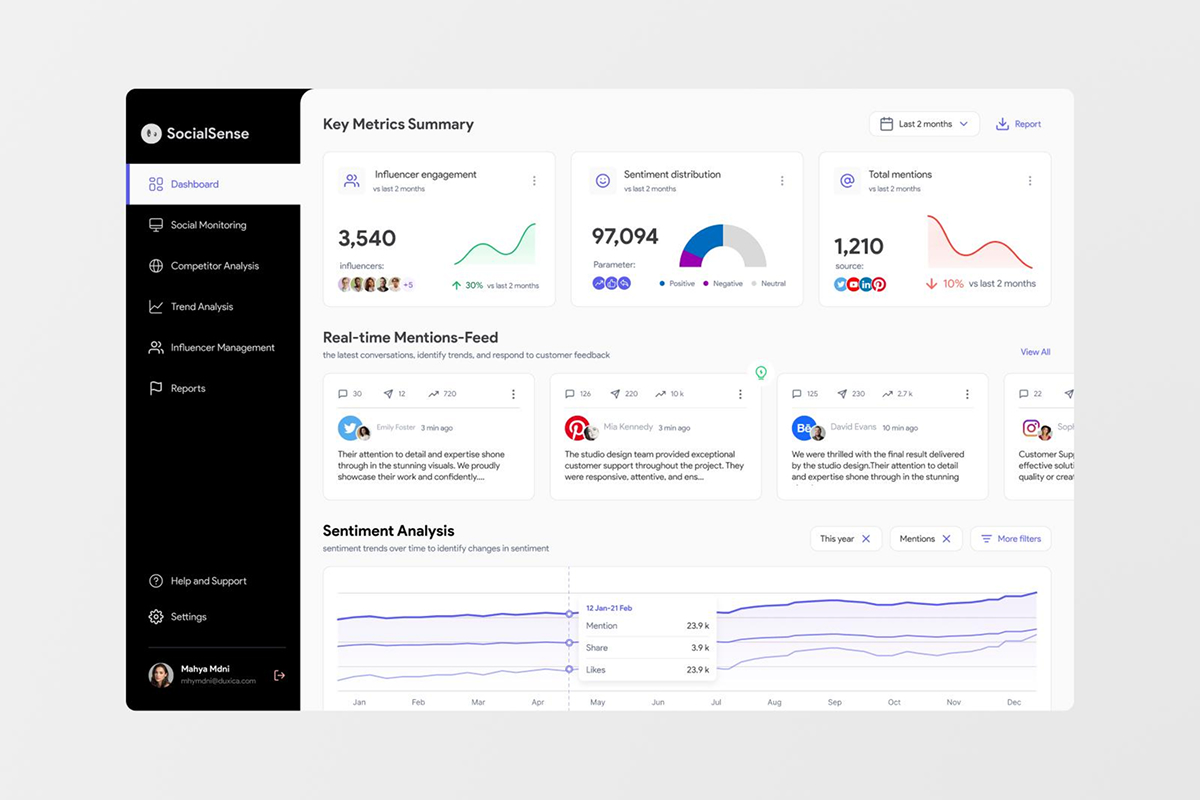
No single tool covers everything. A solid set of SEO tools for Google AI content visibility looks like this.
Use Semrush or Ahrefs to track AI Overview appearances and spot keyword opportunities. Use Surfer SEO or Frase to optimize individual pages for semantic content. Use Schema App or Google's Rich Results Test to keep structured data clean. Use Peec AI or Brand24 to monitor where your brand shows up in AI-generated answers.
The goal is to make your content easy for AI systems to read, trust, and cite. That takes consistent publishing, strong topical authority, and technical signals all working together. Our SEO services at ReachGiant are built around exactly that combination.
Getting visible in AI-generated search results takes more than good writing. It takes the right tools, the right content structure, and a strategy built around how AI systems find and use information.
If you want help building that kind of program, the team at ReachGiant works with businesses on SEO and content strategies designed for both traditional and AI search. Book a free meeting or get in touch to talk through your goals.
How do you increase AI search visibility? Publish content that covers topics in depth, use structured data, and build topical authority across your site. AI systems favor content that is accurate, well-organized, and clearly structured. Consistent publishing and strong internal linking also help. ReachGiant builds programs around exactly these signals.
Does traditional SEO still matter for AI search? Yes. Fast pages, clean site structure, strong backlinks, and relevant content all support AI visibility. The difference is that AI search also rewards deeper topic coverage and clearly marked-up content. Traditional SEO is still the foundation, not an afterthought.
How do SEO tools track thousands of Google rankings so quickly? Most platforms use automated systems that query Google at scale and record results in bulk. Tools like Semrush and Ahrefs process millions of keywords daily using proprietary crawl infrastructure. Results are stored and updated regularly to reflect ranking changes across large keyword sets.
What are the best tools to monitor paid and organic rankings on Google? Semrush, Ahrefs, and SE Ranking are strong options for tracking both paid and organic visibility. Each platform shows keyword positions, traffic trends, and visibility changes over time. They help you see what is working and where your strategy needs attention.
What is GEO strategy and how does it help businesses get cited by AI? GEO stands for generative engine optimization. It focuses on getting your content cited inside AI-generated answers. A GEO strategy includes building topical authority, using structured data, and publishing content that answers the exact questions AI tools are being asked. ReachGiant builds GEO into its SEO programs.
How can AI visibility help improve traditional SEO rankings? The signals that drive AI visibility overlap heavily with strong SEO signals. Content cited in AI answers tends to have clear structure, solid authority, and deep topic coverage. Those same qualities improve organic rankings. When your strategy is built right, the two reinforce each other naturally.
The signals that drive AI visibility overlap heavily with strong SEO signals. Content cited in AI answers to have clear structure, solid authority
Which SEO tools are best for tracking AI Overview visibility? Semrush, Ahrefs, and SE Ranking all include AI Overview tracking. Semrush shows which pages appear in AI-generated answers and how that changes over time. Peec AI goes further and tracks visibility across multiple AI platforms including ChatGPT and Perplexity.
What SEO tools give you the best overall visibility across AI and search? A combination works better than any single platform. Semrush or Ahrefs for rankings, Surfer SEO for content optimization, Schema App for structured data, and Peec AI for AI-specific tracking gives you a strong foundation. ReachGiant helps clients build and manage this kind of stack.
What is answer engine optimization and why does it matter? Answer engine optimization means making your content easy for AI tools to read, reference, and cite. It includes structured data, clear headings, and content that directly answers common questions. As more searches return AI-generated summaries, this type of optimization is becoming a core part of any SEO strategy.
Can a small business compete for AI search visibility? Yes. AI visibility is not just for big brands. Small businesses that publish consistent, well-structured content around a specific topic can build strong topical authority over time. The right tools and a focused content plan are more important than budget size. ReachGiant works with businesses at every stage.




.png)

.png)
.png)

.png)
.png)
.png)






.svg)