.png)
One negative review can cost your business up to 30 potential customers. That is not a reason to panic. It is a reason to respond. Research shows that 80% of consumers are more likely to choose a business that replies to all reviews, a 158% higher rate than businesses that stay silent.
The good news is that how you respond matters as much as the review itself. A thoughtful, professional reply to a bad review can actually build more trust than a page full of five-star ratings with no business response at all.
This guide walks you through exactly how to respond to negative reviews, with real examples for every situation.
Before diving into the how, it helps to understand what is actually at stake when a bad review goes unanswered.
Only about 5% of businesses respond to their reviews, despite 89% of consumers expecting a response. That gap is your opportunity. While your competitors ignore their unhappy customers, a single well-written reply sets you apart.
Here is what the data says about review responses:
The review is public. So is your response. Every future customer reading that thread will judge your business on both.
The biggest mistakes businesses make with negative reviews happen in the first few seconds. Someone reads a complaint, gets frustrated, and types a defensive reply. That response then lives permanently on a public platform for every future customer to read.
.png)
Before you write a single word, follow these rules:
Every professional negative review response follows the same basic structure. Once you know it, you can apply it to almost any complaint across any platform.
The framework has four parts:
1. Acknowledge: Start by recognizing the customer's experience without being defensive. Do not start with "I" and do not open with a long-winded apology. Get straight to the point.
2. Apologize: Apologize for the experience, not necessarily for the mistake. There is a difference. "We are sorry to hear your visit did not meet expectations" is honest and empathetic without admitting fault where fault may not exist.
3. Take it offline: Offer to resolve the issue privately. Include a direct email or phone number. This moves the conversation out of public view and shows future readers that you take complaints seriously.
4. Close positively: End with a brief statement that shows you value feedback and are committed to doing better. Do not ask the reviewer to change or remove their review. It looks desperate and on most platforms, it violates review policies.
.png)
Responding to a negative review does not have to be complicated. This flowchart breaks the full process into six clear steps, starting with the most important one: pausing before you type. The only fork in the road is whether the review is genuine. If it is not, you flag it and move on. If it is, you follow the steps straight through to resolution.
Here are response examples for the most common types of bad reviews you will encounter.
The review: "Terrible service. Waited 45 minutes and nobody came to help me. Will not be coming back."
The response: "Thank you for taking the time to share this. A 45-minute wait is not the experience we aim to provide, and we are sorry it fell short. We would like to understand what happened and make it right. Please reach out to us directly at [email] or [phone] so we can look into this for you. We appreciate your feedback and hope to have the chance to do better."
The review: "They charged me twice for the same order. Complete scam."
The response: "Thank you for flagging this. We take billing concerns very seriously and want to resolve this as quickly as possible. Our records do not show a duplicate charge on our end, but we would never want a customer to feel they were overcharged. Please contact us at [email] so we can pull up your account and review the transaction together. We are confident we can clear this up."
The review: "The worst experience of my life. This place should be shut down."
The response: "We are sorry to hear your experience left you feeling this way. We take all feedback seriously, even when it is difficult to read. If you are willing to share more details about what went wrong, we would genuinely like to understand it. Please reach out to us at [email] and we will do our best to make it right."
The review: Clearly written by someone who was never a customer, possibly a competitor.
The response: "We appreciate all genuine customer feedback, but we are unable to find any record of this interaction in our system. If we have misidentified your visit, please contact us at [email] so we can look into this properly. We are committed to resolving real concerns and take every review seriously."
Do not accuse the reviewer of lying in public. Flag the review to the platform directly and follow their dispute process. Google, Yelp, and Amazon all have mechanisms to report and request removal of reviews that violate their policies.
.png)
Before you flag a review, check for these telling signs:
Different platforms have different rules, audiences, and removal options. Here is how to approach the most common ones.
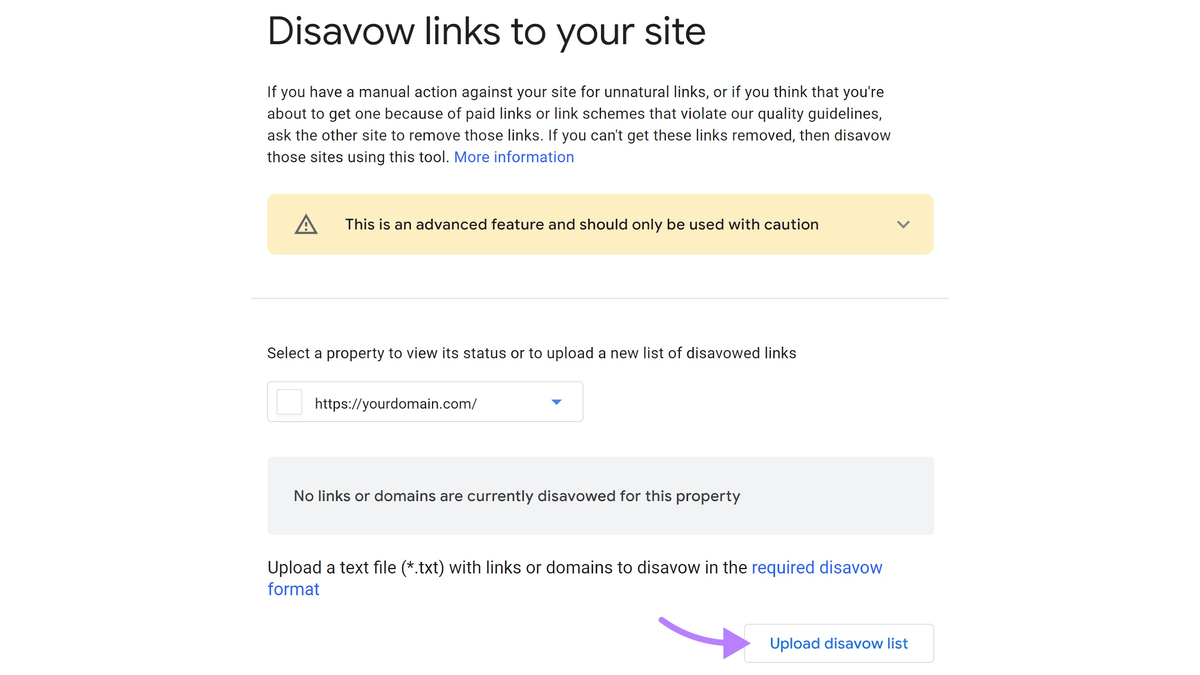
Google is the most trusted review platform, with 67% of consumers trusting Google reviews the most. You cannot remove a negative Google review unless it violates Google's policies. You can flag it for removal if it contains hate speech, spam, fake content, or a conflict of interest. Otherwise, your response is your only tool.
.png)
To flag a Google review: find the review in your Google Business Profile, click the three-dot menu next to it, and select "Report review." Google will evaluate it against their policies. Removal is not guaranteed and can take several weeks.
44% of consumers refer to Yelp for business reviews. Yelp does not remove reviews simply because a business disagrees with them. You can flag reviews that violate Yelp's content guidelines, including fake reviews, reviews from competitors, or reviews that contain false information. You can also respond publicly, which every future customer reading the thread will see.
Amazon allows sellers to report reviews that violate their community guidelines. Fake reviews, reviews containing profanity, and reviews that are clearly unrelated to the product can be reported through Seller Central. Amazon has significantly increased enforcement, removing over 240 million policy-violating reviews in 2024.
The response framework in Step 3 works across every platform. The tone may shift slightly (Yelp responses tend to be slightly more casual than Google responses) but the structure stays the same: acknowledge, apologize, take it offline, close positively.
Taking a conversation offline is one of the most effective things you can do in a negative review response. It signals to future readers that you take complaints seriously and handle them privately rather than arguing in public.
Here is how to do it without it looking dismissive:
Here is something most businesses miss entirely. 82% of shoppers look for negative reviews to establish credibility, because consumers mistrust a business that only has five-star ratings as too good to be true.
A business with 4.7 stars and thoughtful responses to every negative review is far more trustworthy than one with a perfect 5.0 and no replies at all. Negative reviews handled well do three things for you:
They show you are real. No business is perfect. Customers know this. A few honest negative reviews mixed into an otherwise strong profile actually increases purchase confidence.
They give you free market research. If three different customers mention the same problem, that is a signal worth acting on. Use negative feedback to improve your service, your processes, or your communication.
They give you a public showcase. Every response you write is visible to every future customer reading that review. A calm, professional, empathetic reply under a harsh review is one of the strongest trust signals you can display.
At ReachGiant, we help businesses manage their online reputation as part of a broader digital marketing strategy. If negative reviews are affecting your visibility or your conversions, our digital marketing services can help you build a review strategy that works in your favor.
Negative reviews are not the end of your reputation. They are a test of how you handle adversity in public. A business that responds professionally, takes complaints seriously, and follows up with real solutions almost always comes out ahead of one that ignores feedback or responds defensively.
The process is straightforward. Pause before you reply. Follow the four-part framework. Take difficult conversations offline. Flag genuine policy violations through the right channels. And use the feedback to get better.
If you need help building a review response process that protects your reputation and supports your growth, ReachGiant works with businesses across the US to do exactly that. Get in touch or book a free meeting to get started.
How do you respond to negative feedback or bad reviews?
Acknowledge the experience, apologize for the inconvenience, offer to resolve the issue privately with a direct contact, and close with a positive commitment to doing better. Keep the response under 150 words. Never argue, get personal, or ask for the review to be removed in your public reply.
What is the best way to handle a negative review when you know it is undeserved?
Respond calmly and professionally without accusing the reviewer publicly. State that you cannot find a matching record and invite them to contact you directly. If the review violates platform policies, flag it for removal through the platform's reporting process.
How do you respond to a bad review when the customer is wrong?
Do not say they are wrong in public. Acknowledge the experience, share what your records show without being aggressive, and invite them to contact you directly to resolve the discrepancy. Future readers will see your calm, factual response and judge accordingly.
How do you turn a negative review into a positive one?
Resolve the issue genuinely and privately. Once the customer feels heard and the problem is fixed, you can politely ask whether they would consider updating their review. Never pressure them. A resolved complaint that gets updated to four or five stars is one of the most credible signals on any review platform.
How do you deal with fake negative reviews?
Respond calmly, note that you cannot find a matching record, and invite the person to contact you directly. Simultaneously, flag the review to the platform for violating their policies on fake or fraudulent content. Do not accuse the reviewer of lying publicly.
Is there a way to remove negative reviews from Google?
You cannot remove a Google review simply because you disagree with it. You can flag it for removal if it violates Google's content policies, such as fake reviews, spam, hate speech, or conflict of interest. Google will evaluate the flag and may remove it, though removal is not guaranteed.
How can I remove negative reviews or listings on Yelp?
Yelp only removes reviews that violate their content guidelines. You can flag a review through your Yelp Business account if it is fake, contains false information, or was left by a competitor. Otherwise, responding professionally to the review is your most effective option.
How do I remove a bad review from Amazon?
Report the review through Seller Central if it violates Amazon's community guidelines, such as containing fake content, profanity, or being unrelated to the product. Amazon has increased enforcement significantly and removed over 240 million policy-violating reviews in 2024.
What is the best way to respond to negative comments?
Stay calm, be specific, avoid generic copy-paste replies, and always offer to take the conversation offline. Personalized responses that directly address the complaint perform far better than template replies that feel automated.
What is the best way to handle a bad customer who leaves a negative review on Yelp or other sites?
Treat every reviewer as someone whose feedback matters, even if their tone is difficult. Respond professionally, keep emotion out of the reply, offer a private resolution path, and move on. Do not engage in back-and-forth public arguments. The audience you are really writing for is every future customer reading the thread.


.png)

.png)
.png)

.png)
.png)
.png)





.svg)