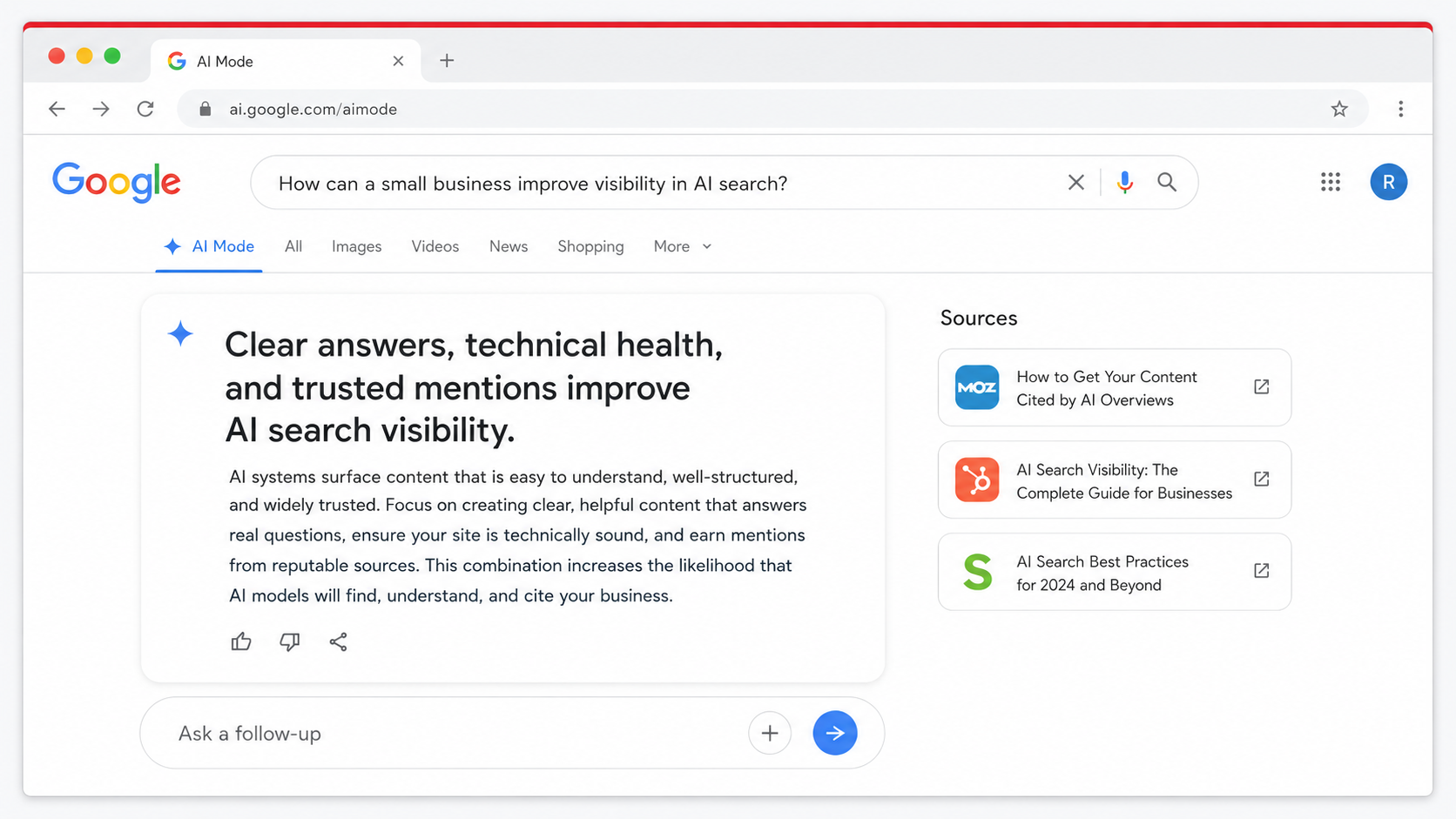
Google now answers some searches with a conversation instead of a list of links. That shift has business owners asking a fair question about what happens to their traffic. At ReachGiant, we help companies stay visible as Google AI Mode changes the way people search.
Google AI Mode is a conversational search experience built into Google Search. It sits in its own tab, next to the normal results.
Instead of a page of blue links, you get a written answer with citations. You can then ask follow-up questions without starting over. It runs on Google's Gemini models, which handle longer, multi-part questions better than a keyword search can.
The queries it suits best are the messy ones. Comparing options, weighing tradeoffs, or asking something that used to take four separate searches.
Think of it as AI Overviews with more depth and a back and forth. Google's help page for AI Mode covers where it is available and what the current limits are.
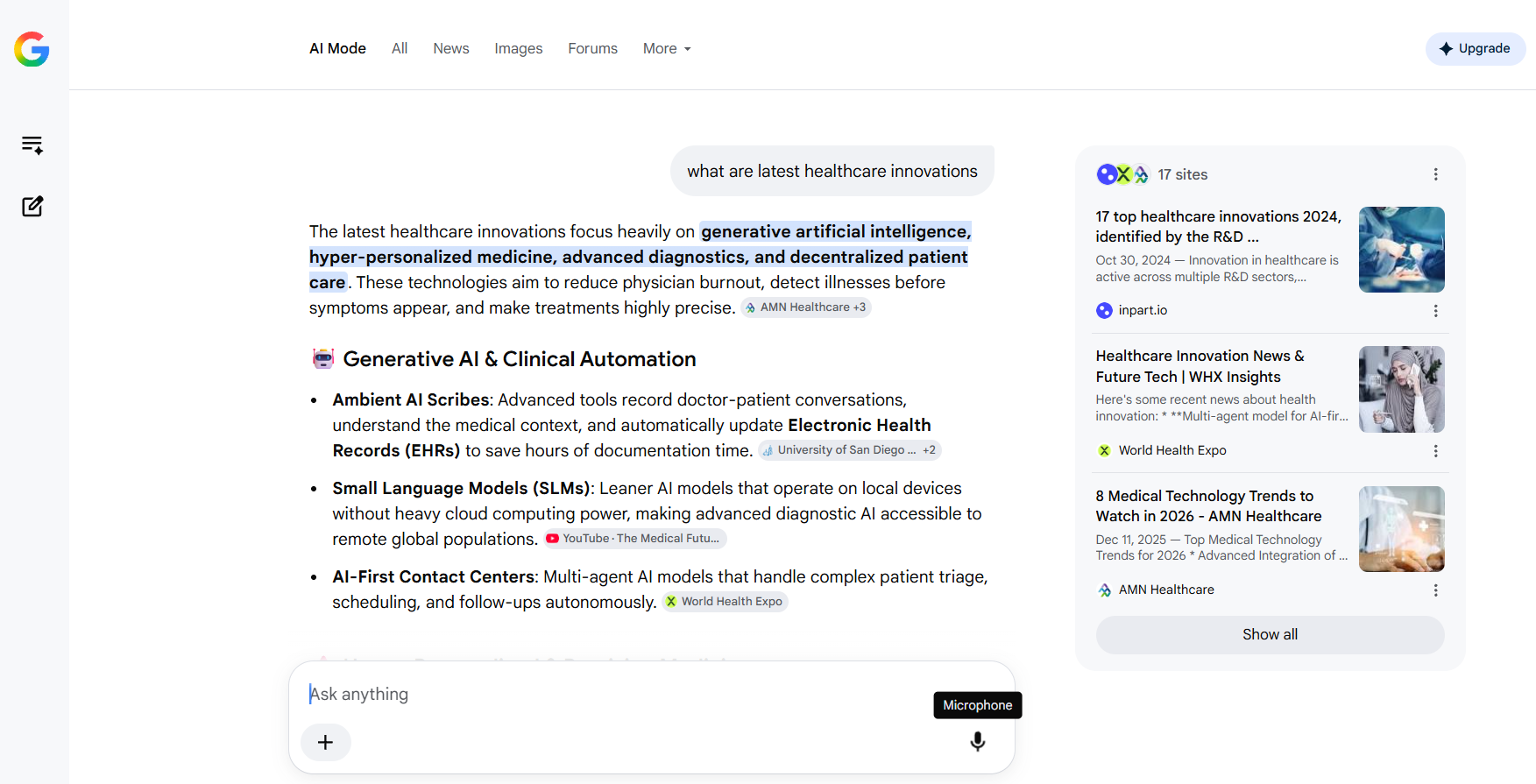
Google uses a method it calls query fan-out. Here is the process in plain terms.
One question can turn into a dozen searches behind the scenes. Step three is the part that matters for your business. Your page can get pulled into an answer for sub-questions you never set out to target. A page that covers a subject thoroughly has far more ways to be found. Our post on optimizing content for AI search walks through how to structure pages for this.
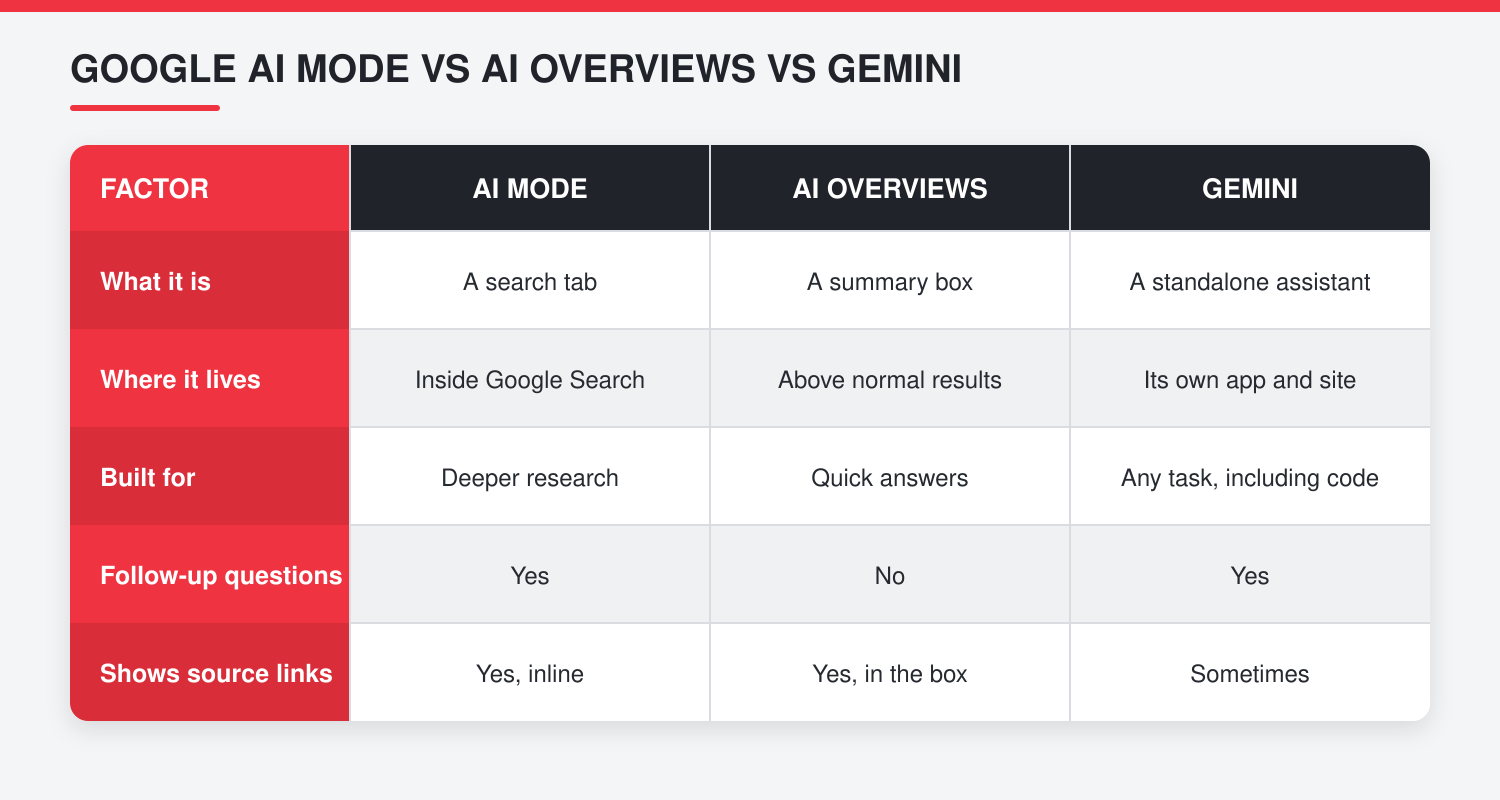
These three get mixed up constantly. Here is the difference.
Gemini is the model. AI Mode is one product built on top of it, tuned for search and grounded in Google's live index. AI Overviews is the simpler summary that appears above standard results. If you are also wondering whether AI-written pages hold up in these answers, our post on whether AI content ranks covers what we have seen.
Less than the panic suggests. Google's guide to its AI features states there is no separate index and no special markup for these answers. The pages that rank well are the pages that get cited.
What shifts is emphasis. Four things carry more weight than they used to.
Passages over pages. AI Mode quotes sections, not whole articles. Each heading should answer one clear question in its first two sentences.
Meaning over exact keywords. Google reads entities and context. Cover the related terms a real expert would mention, not just your target phrase.
Topic depth over single posts. Fan-out rewards sites that cover a subject from several angles. Ten connected pages beat one long article, because each one can answer a different sub-question.
Technical health. If your content loads after scripts run, or key pages are blocked, none of the above applies. Clean structure, fast pages, and solid internal links keep your content eligible.
Website quality still decides what happens after the click. AI search sends fewer visitors, but they arrive better informed and further along. The page they land on has to answer quickly and make the next step obvious.
None of this replaces the basics. Helpful content, clear headings, honest claims, and real expertise still do the heavy lifting. Schema and internal links help Google read what you have, but they cannot rescue a page with nothing to say.
.png)
Work through this list in order.
The first three items usually move the needle fastest, because they change how your pages get read at the passage level. Reviews deserve extra attention too, because outside sources are what confirm your claims. Our guide on responding to negative reviews explains why replies matter as much as ratings. If you want this handled as one program, our AI SEO services cover the content, technical, and authority work together.
Google AI Mode is another step in how search works, not the end of SEO. Every previous shift in Search rewarded the same thing, which was being genuinely useful and easy to read. Businesses that publish useful content, run a fast website, and earn outside trust will keep showing up in both classic results and AI answers. The fundamentals did not change. The reward for doing them properly got bigger.
If you want to know how your site looks to AI search today, book a meeting with our team or get in touch for a visibility review.
What is Google AI Mode?
Google AI Mode is a conversational search tab inside Google Search. It gives written answers with citations instead of a list of links, and it lets you ask follow-up questions without starting a new search.
How does Google AI Mode work?
It uses query fan-out. Your question gets split into smaller sub-questions that run at the same time across Google's index. The results are combined into a single answer with links to sources.
Is Google AI Mode different from AI Overviews?
Yes. AI Overviews is a short summary above normal results with no follow-up. AI Mode is a separate tab built for deeper research, and it supports back and forth conversation.
What is the difference between Gemini and Google AI Mode?
Gemini is the underlying model. AI Mode is a search product built on it, tuned for questions and grounded in Google's index. Gemini as an app handles broader tasks like writing and coding.
Is Google AI Mode free to use?
The standard experience is free with a Google account. Access to Google's most advanced models inside AI Mode requires a paid Google AI plan and comes with daily usage limits.
Can I turn off Google AI Mode?
AI Mode is a separate tab, so you can simply not open it. There is no official switch that permanently removes AI Overviews, though the Web filter shows classic results only.
Does Google AI Mode affect SEO rankings?
It does not create separate rankings. Google draws from the same index, so pages performing well organically have the best chance of being cited inside AI answers.
How can businesses appear in Google AI Mode results?
Answer real customer questions directly, cover topics in depth across linked pages, front-load each section, and earn reviews and mentions elsewhere. Strong organic performance remains the main path in.
Does website quality influence AI Mode visibility?
Yes. Slow pages, blocked resources, and content that loads after scripts can keep good writing from being indexed at all. Clean structure and fast loading make everything else count.
Should businesses change their SEO strategy because of Google AI Mode?
Adjust rather than rebuild. Keep the fundamentals and add clearer passage-level answers, deeper topic coverage, and stronger outside trust signals like reviews and press mentions.


.png)

.png)
.png)

.png)
.png)
.png)








.svg)