
Most people use ChatGPT the same way every time and wonder why the results feel average. The quality of your output depends almost entirely on how you write your prompts. This ChatGPT cheat sheet gives you the frameworks, templates, and habits that get real results fast.
ChatGPT generates responses based on the instructions you give it. It does not think for itself. It responds to exactly what you write. The more specific and clear your prompt, the better the output.
Think of it like briefing a new team member. A vague brief gets a vague result. A detailed, well-structured prompt gets something you can actually use.
Good ChatGPT prompts follow a simple structure. Most strong prompts include four elements.
A prompt that covers all four areas will almost always beat a one-line request. This is the foundation of solid prompt engineering.
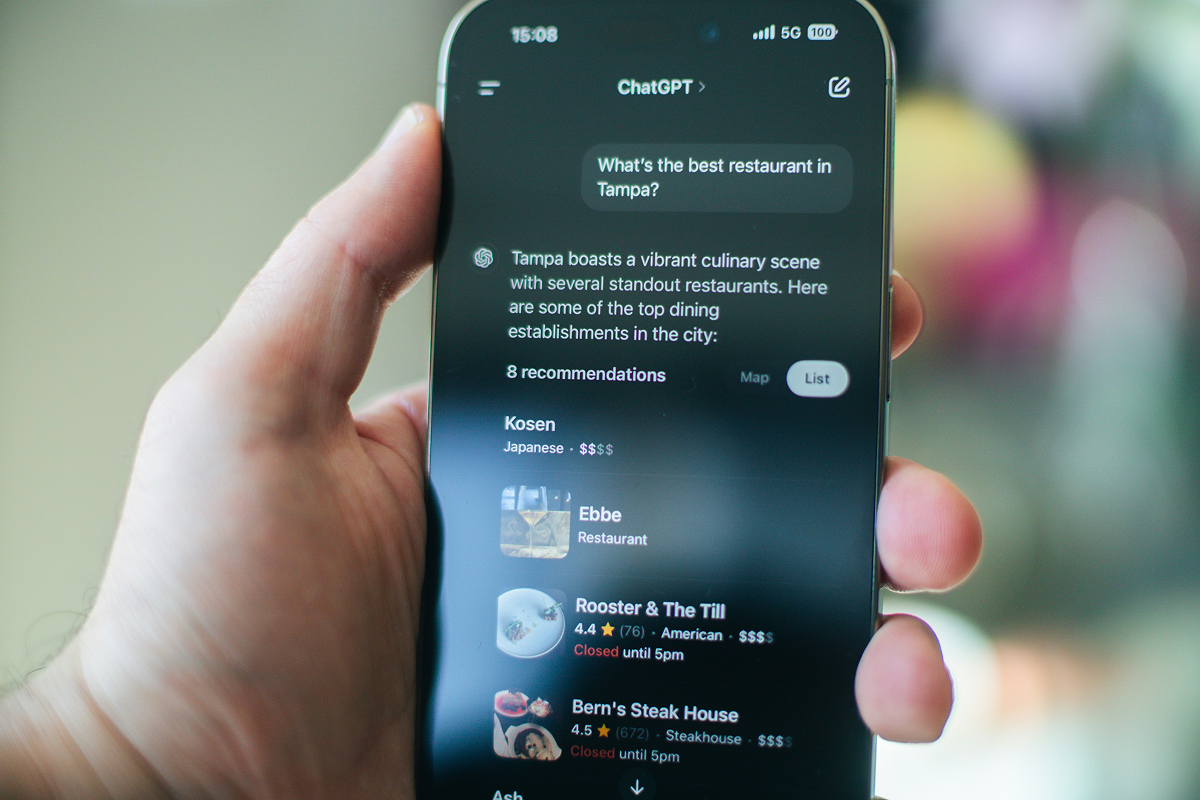
These reusable prompt templates cover the most common business tasks. Copy them, edit to fit your situation, and use them directly.
For writing content: "Write a [type of content] for [audience] about [topic]. Keep the tone [tone]. Use short sentences and avoid jargon. Format it as [format]."
For summarizing: "Summarize the following in [number] bullet points. Focus on the key takeaways for [audience]."
For rewriting: "Rewrite the following to sound more [tone]. Keep the same meaning but make it easier to read."
For brainstorming: "Give me [number] ideas for [goal or topic]. Each idea should be [constraint, such as under 10 words or suitable for social media]."
For customer replies: "Write a professional reply to this customer message. Be friendly, brief, and offer a clear solution. Message: [paste message here]."
These prompt templates work across departments and cut down on editing time significantly.
The biggest productivity win comes from building AI workflows around tasks your team does every week. These ChatGPT prompts handle the most common ones.
Prompts to automate repetitive tasks like these give teams back real hours every week.
If you are getting weak outputs, a few simple adjustments help right away.
These small changes improve ChatGPT responses instantly and consistently across any task type.
Beyond the basic structure, a few prompt engineering approaches are used daily by teams that rely heavily on AI tools.
Chain-of-thought prompting. Ask ChatGPT to think through a problem step by step before giving an answer. This works well for analysis, strategy, and decision-making tasks.
Role-based prompting. Assign a specific role before your task. Try "Act as an experienced SEO strategist. Review this page title and suggest three improvements."
Few-shot prompting. Give it two or three examples of the output style you want, then ask it to continue in that same style. According to Search Engine Journal, structured prompts with examples consistently produce higher-quality AI outputs than open-ended requests.
These are the best ChatGPT prompt frameworks for outputs that match your standards without heavy revision.
The best use of ChatGPT is not one-off tasks. It is building repeatable AI productivity workflows that your whole team follows.
A simple workflow looks like this. Write the brief. Build the prompt using the framework above. Review the output. Edit for accuracy and tone. Publish or send. Over time, save your best prompts in a shared document and reuse them across campaigns.
At ReachGiant, we help businesses align tools like this with their broader digital strategy. Whether you are working on SEO or Google Ads, consistent content output makes a real difference. AI workflows speed up the production process without cutting corners on quality.
Business ChatGPT prompts are specific, structured, and connected to a real goal. They are not general questions. They are instructions written with context, a clear task, and a defined format.
The shift from "write me a blog post about X" to a fully structured prompt is where most of the productivity gain comes from. Practice it consistently, and the outputs improve fast.
ReachGiant works with businesses across the country to build digital strategies that drive results. If you want help putting AI tools to work inside a larger marketing system, explore our web development services or book a meeting to talk through your goals.
How do I unlock ChatGPT's full potential?
Use the four-part framework: role, task, context, and format. The more specific your prompt, the stronger the output. Save your best prompts as reusable templates and build them into regular workflows for the biggest productivity gains.
What is the best ChatGPT prompt cheat sheet approach?
Start with a clear role and task, then add context and a format instruction. Plug-and-play templates work well for content, summaries, and email drafts. Adjust based on the output you get and save what works.
What are the best ChatGPT prompts for business?
The most useful business ChatGPT prompts cover writing, summarizing, customer replies, social media, and reports. Role-based prompts work especially well. Assign a specific expert role before your request and the output quality improves significantly.
What do most people use ChatGPT for?
Most users rely on it for writing, summarizing, brainstorming, and answering questions. Businesses use it to automate repetitive tasks, draft content, and speed up workflows across marketing, sales, and operations.
How does ChatGPT work?
ChatGPT uses a large language model trained on vast amounts of text. It predicts the most relevant response based on your input. It does not browse the internet by default and works best when given clear, specific instructions.
Is there a free version of ChatGPT?
Yes. OpenAI offers a free tier with access to a base model. Paid plans give access to more advanced models, faster responses, and additional features like image generation and extended context windows.
How do I get the best prompts for ChatGPT?
Write prompts using the role, task, context, and format structure. Study examples from prompt engineering guides. Test different versions of the same prompt and compare outputs. Save what works and build a personal prompt library over time.
What are the four types of chatbots and how do they relate to prompt engineering?
The four main types are rule-based, keyword-based, menu-driven, and AI-powered. ChatGPT falls under AI-powered. Prompt engineering applies specifically to AI-powered systems where the quality of your input directly shapes the quality of the output.
What are some of the most useful ChatGPT prompts?
The most useful prompts tend to be the ones tied to tasks you do repeatedly. Summarizing, rewriting for a specific audience, writing email sequences, and building outlines are all high-return use cases that save real time when prompted well.
How are marketers using AI to add value?
Marketers use AI-powered tools to write faster, test more variations, and keep content output consistent. ChatGPT helps with drafting, research, and ideation. The teams getting the most value treat it as a workflow tool, not a one-off assistant.


.png)

.png)
.png)

.png)
.png)
.png)





.svg)