
AI search has changed how shoppers find brands. Product research now happens inside AI Overviews and chat tools, often before anyone clicks a website. At ReachGiant, we build AI SEO strategies that keep B2C brands visible in both places.
AI SEO is the work of making your B2C content easy for AI systems to read, trust, and cite. Those systems include Google AI Overviews, AI Mode, ChatGPT, and Perplexity. For a consumer brand, ranking means being named in the answer when someone asks for the best option in your category.
It does not replace SEO. Google's own documentation on AI features states there are no extra requirements to appear in AI Overviews. The same index and the same quality signals apply.
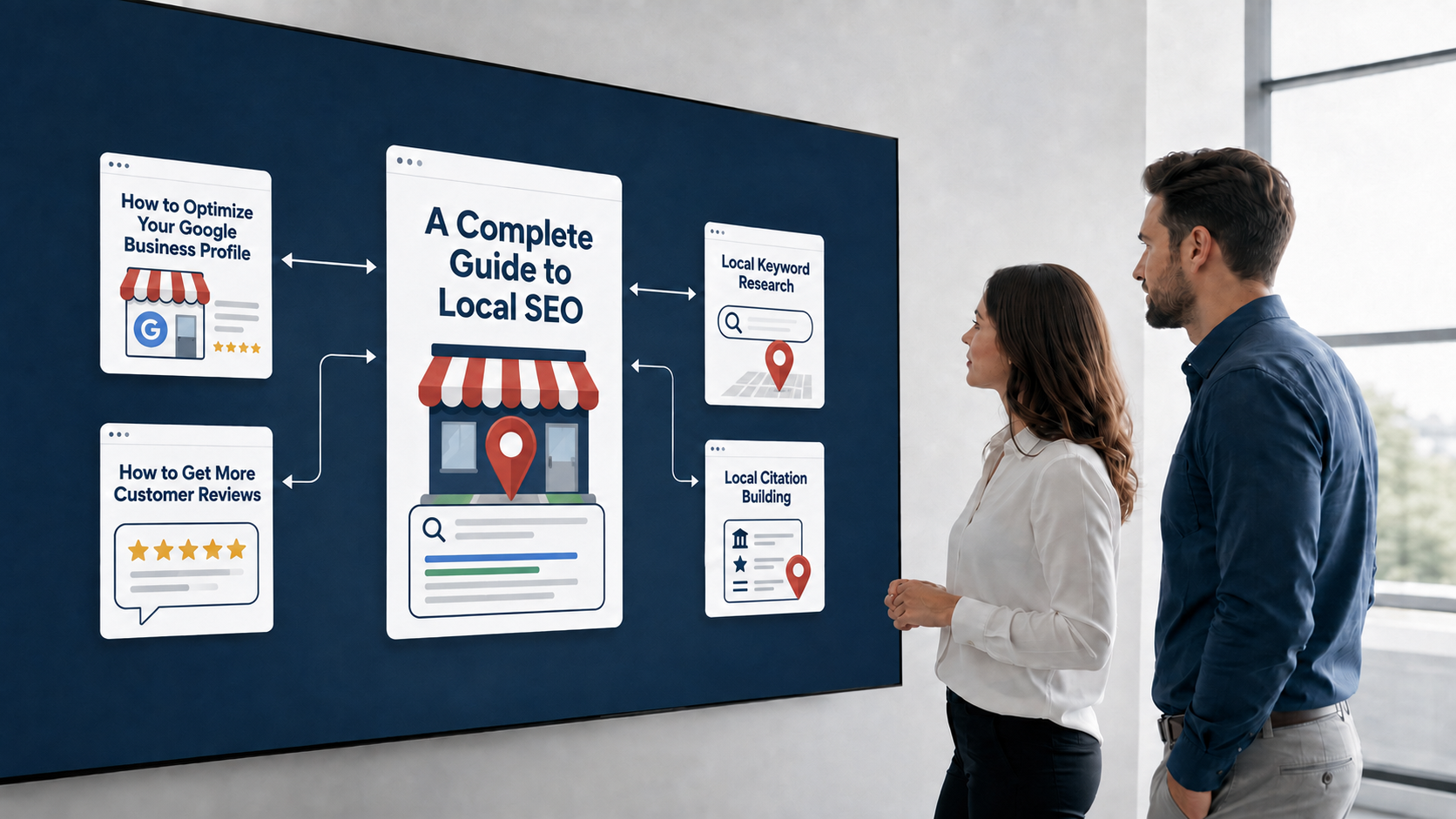
What changes is emphasis. AI tools pull short passages, so clear answers matter more. They match meaning instead of exact words, so entities and semantic relevance matter more. They also favor sites with deep coverage of a subject, so topical authority beats one well-optimized page.

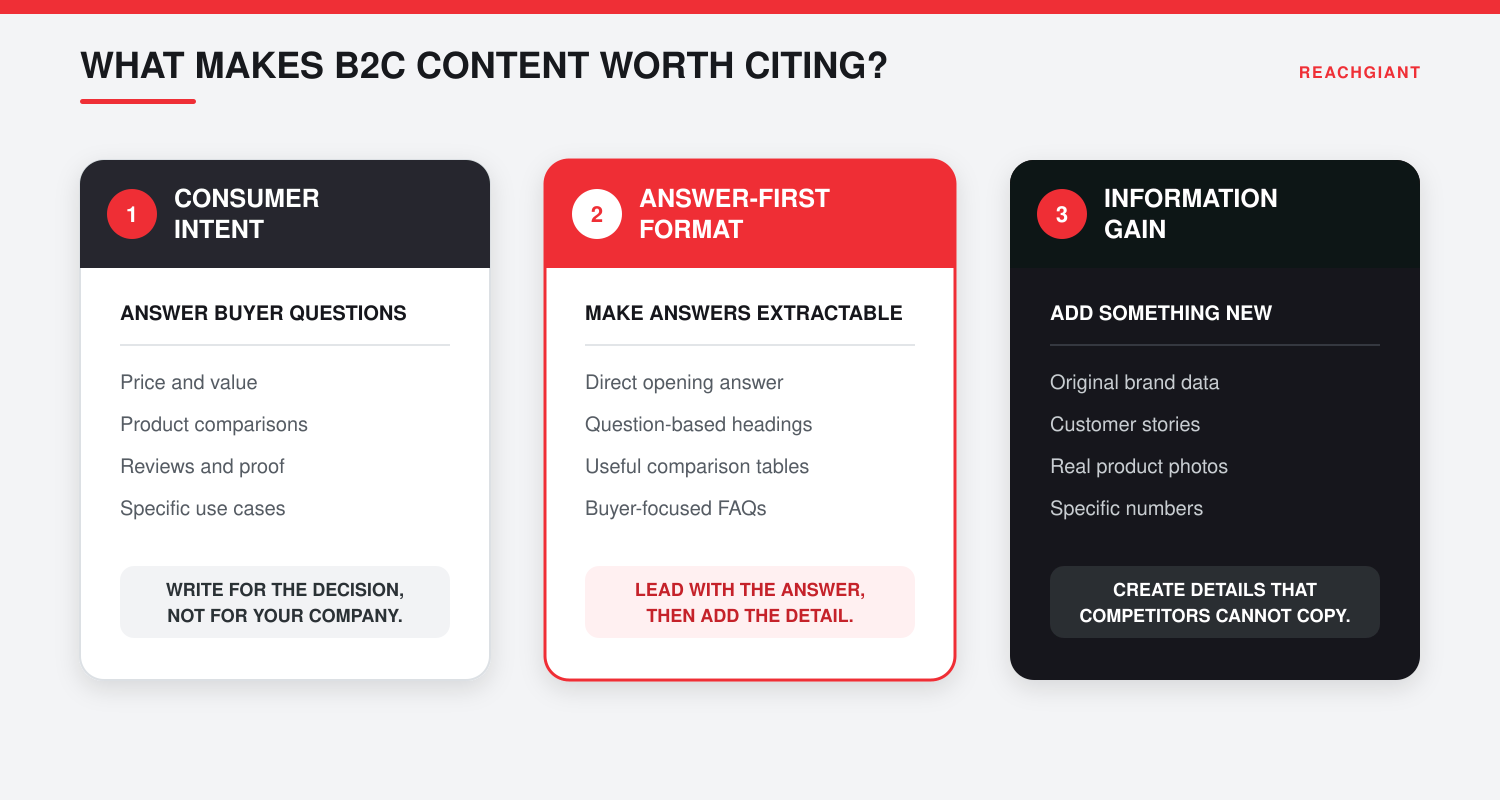
Three things separate B2C content that gets cited from content that gets skipped.
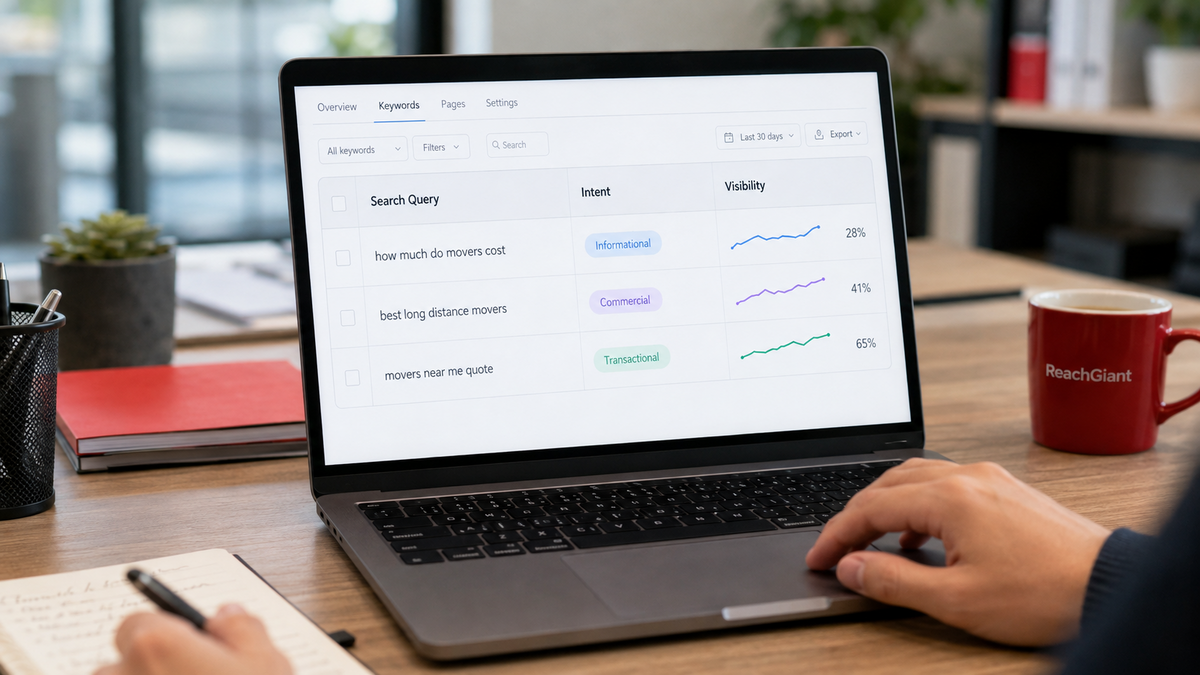
Consumer intent. B2C buyers ask about price, comparisons, reviews, and specific use cases. Content that answers those questions directly gets pulled into AI answers. Content that mostly talks about your company does not. Read your own search queries and support questions, then write the page that settles each one.
Answer-first formatting. Lead each section with a two-sentence answer, then explain underneath. Use tables for comparisons and bullets for lists. Add an FAQ block covering the questions buyers really ask. Our post on optimizing content for ChatGPT shows the format in practice.
Information gain. AI tools skip pages that repeat what ten other pages already said. Original data, customer stories, real product photos, and specific numbers give a page something worth quoting. This is the hardest part and the biggest edge. Most brands can produce it without much effort, because they already hold data nobody else has. Support tickets, return reasons, and sales calls are full of specifics competitors cannot copy.
Good content cannot carry a slow or messy site. AI systems still crawl and index pages the normal way, so technical basics decide whether your content is eligible at all.
Focus on a short optimization list. Pages should load fast on phones. Important text should sit in the HTML, not appear after scripts finish running. Site structure should stay shallow and clear. Internal links should connect related pages so crawlers can see which topics you cover in depth.
Conversion matters just as much. AI search sends fewer but better-informed visitors, so the page they land on has to do more work. Clear pricing, short forms, and visible proof turn that smaller pool of traffic into sales.
There is a second payoff here. The same speed and clarity that help your B2C content rank in AI results also raise Google Ads quality scores and lower your cost per click. Our SEO services treat the site and the content as one job because the results are tied together.
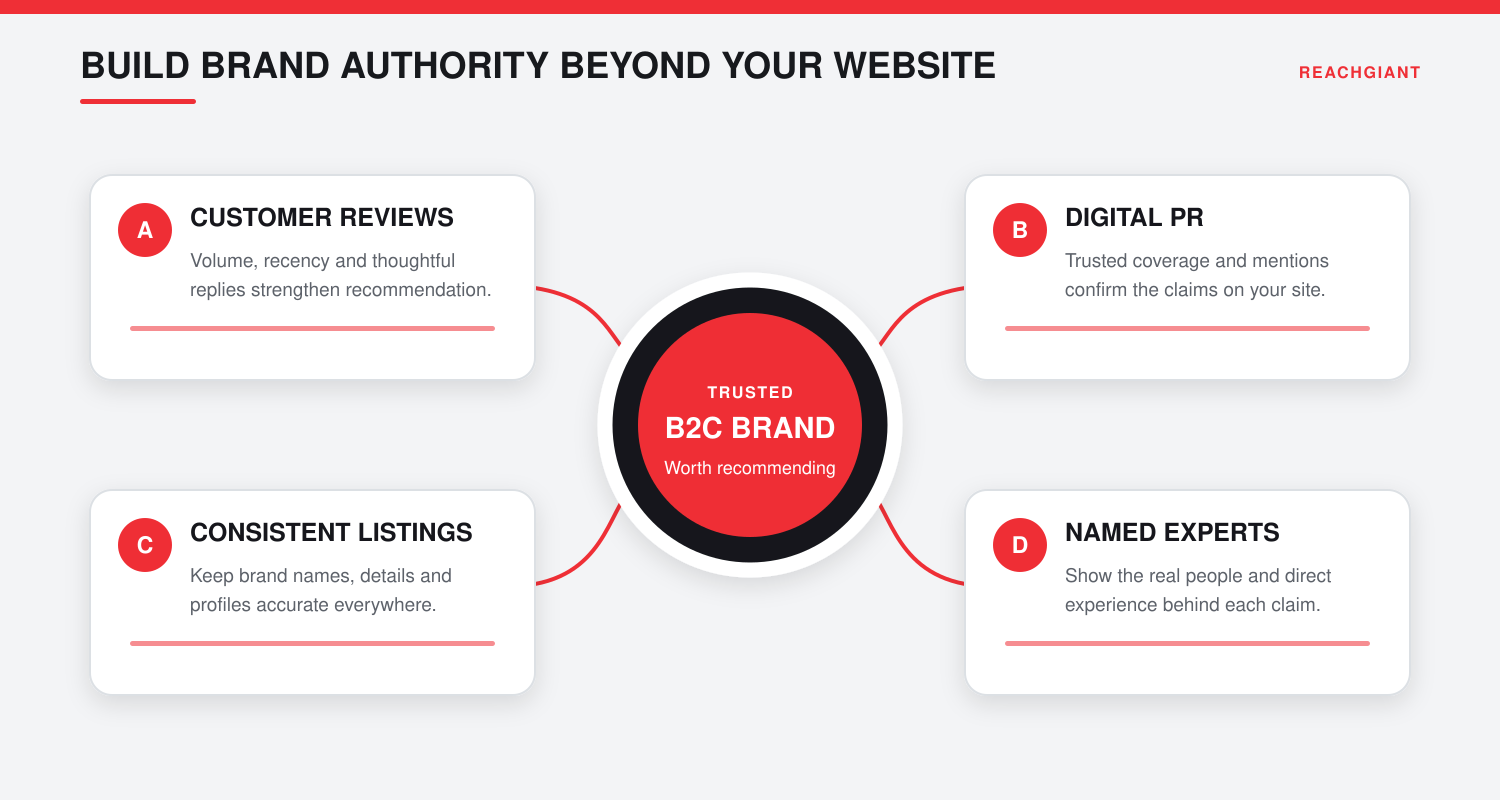
AI systems weigh what the rest of the web says about you. A claim on your own site is one signal. Reviews, press coverage, and mentions on trusted sites confirm it. When those outside sources disagree with your own pages, the system hedges, and hedged answers rarely name a brand.
For B2C brands, reviews carry the most weight. Volume, recency, and how you reply all feed the case that you are worth recommending. Our guide on responding to negative reviews explains why replies count as much as star ratings.
Beyond reviews, focus on digital PR, an accurate Google Business Profile where it applies, and consistent brand details across every listing. Named experts on your team help too. AI tools look for real people behind claims.
None of this works as a one-time project. Ranking B2C content through AI SEO rewards brands that keep publishing, keep fixing, and keep earning outside mentions. Here is a short checklist to work through.

Work down that list in order. The first three items usually produce the biggest gain for B2C brands, because they fix how AI systems read your catalog and your topic coverage at the same time. For the tracking side, our guide on ranking in Google AI Overviews covers what to watch.
Google's guide to generative AI features is worth reading before you buy any AI SEO tool. Most tools cannot see inside these systems, whatever they claim.
Ranking B2C content in AI search takes more than publishing keyword-focused posts on a schedule. You need content worth citing, a site that loads fast, and a brand the rest of the web vouches for. Those three things lift organic rankings and paid performance at the same time, which is why we treat them as one plan rather than three projects.
If you want a read on where your content stands, book a meeting with our team or get in touch for an AI SEO audit of your B2C content.
What is AI SEO, and how is it different from traditional SEO?
AI SEO aims to get your content cited inside AI answers. Traditional SEO aims to rank a page. The work overlaps heavily, but AI SEO puts more weight on clear passages, entities, and topic depth.
How can B2C businesses optimize content for AI search?
Answer buyer questions directly and early. Cover price, comparisons, and real use cases. Add tables, bullets, and FAQs. Include original details like customer stories or your own data that competing pages cannot match.
Does AI-generated content rank well in Google?
Google judges quality, not the tool used to write it. Helpful, accurate, well-checked content can rank. Mass-produced filler gets treated as spam. Human review and original detail make the difference.
How do Google AI Overviews affect SEO?
They reduce clicks on some informational queries while showing more brands per result. Pages that already rank well have the best chance of being cited. Traditional SEO remains the foundation.
What type of B2C content performs best in AI-powered search?
Comparison pages, buying guides, pricing explainers, and review-rich product pages. Anything that answers a purchase question directly. Thin lifestyle posts with no specifics rarely get cited.
Why is structured data important for AI SEO?
Structured data tells search systems what your content means rather than making them guess. FAQ, Product, and Organization markup help your pages qualify for rich results and clarify your brand as an entity.
How do reviews and brand mentions influence AI search visibility?
AI systems check whether outside sources back up your claims. Steady reviews, press coverage, and mentions on trusted sites all raise confidence. A brand nobody discusses looks risky to recommend.
Can website design affect AI SEO performance?
Yes. Slow pages, blocked resources, and content loaded by scripts can keep your best writing from being indexed. Clean structure and fast loading make everything else you do work harder.
Should businesses combine SEO and Google Ads in the AI era?
Combining them helps. Ad data reveals which terms bring buyers, which guides your content. Better content raises ad quality scores and lowers cost per click. Each channel makes the other cheaper.
How can a digital marketing agency help improve AI search visibility?
An agency brings the tools, testing, and process to run content, technical fixes, and paid search together. That saves you from learning each piece on your own budget.


.png)

.png)
.png)

.png)
.png)
.png)






.svg)