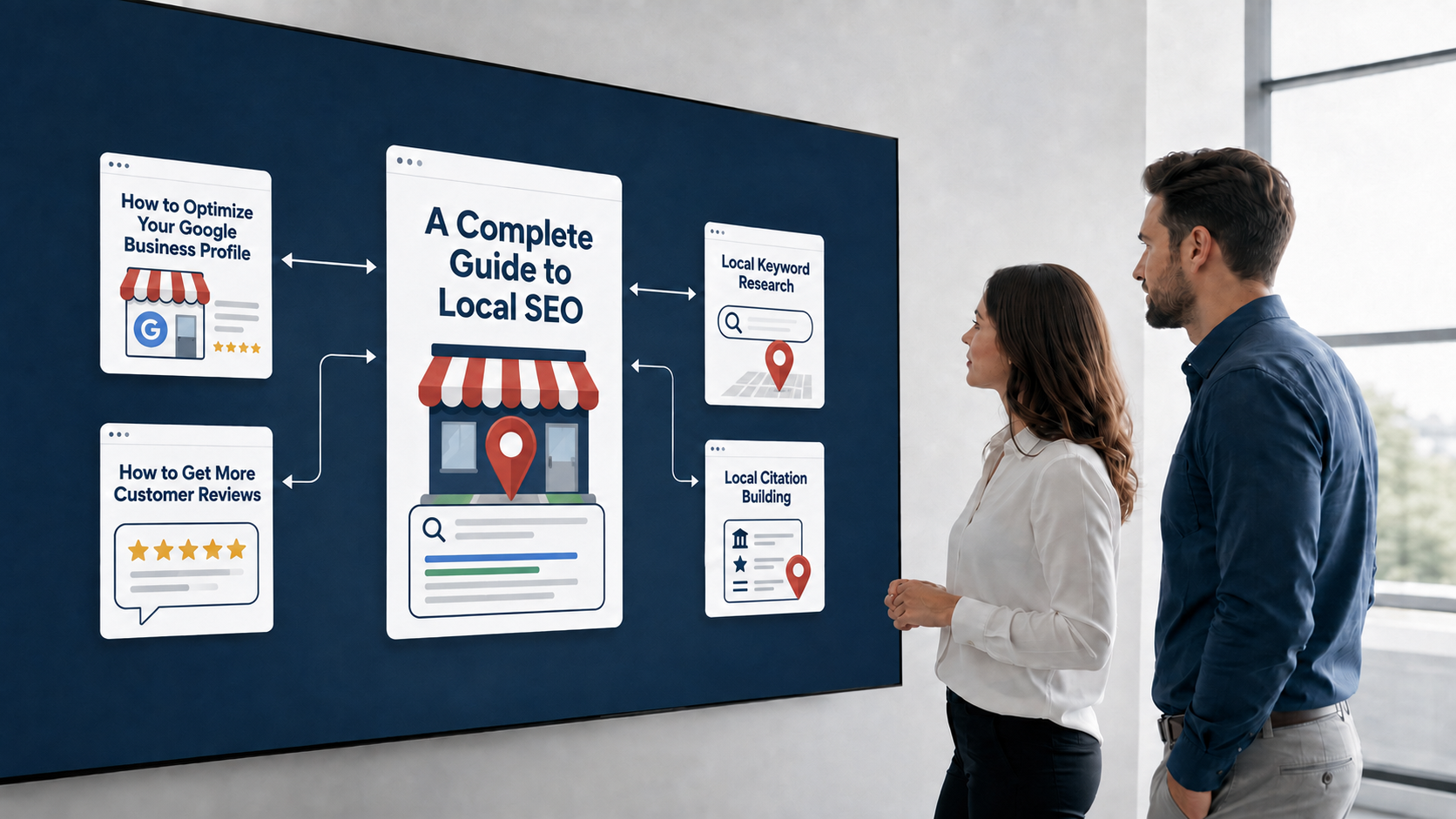
Internal links used to be about moving visitors and crawlers around your site. They still do that, but AI search added a second job. Links now tell search systems which of your pages belong together, and at ReachGiant we treat that structure as part of the content plan rather than a cleanup task.
The old reasons have not gone away. Links help crawlers find your pages, pass authority from strong pages to weak ones, and give readers somewhere sensible to go next.
What changed is that AI systems judge pages in relation to each other. When a tool decides whether your site is a credible source on a subject, it looks at how much you cover and how those pages connect. A single good article surrounded by nothing looks thin. Twelve connected articles look like expertise.
Google breaks one question into several smaller searches and pulls the answers together. That means depth across linked pages gives you more ways to be found than one page ever could. Our guide on how AI is changing SEO covers that shift in more detail.
Internal linking is the cheapest way to show those relationships. You already own the pages. You are just telling search systems how they fit together. That is why internal linking in AI SEO deserves planning rather than a quick pass before publishing.
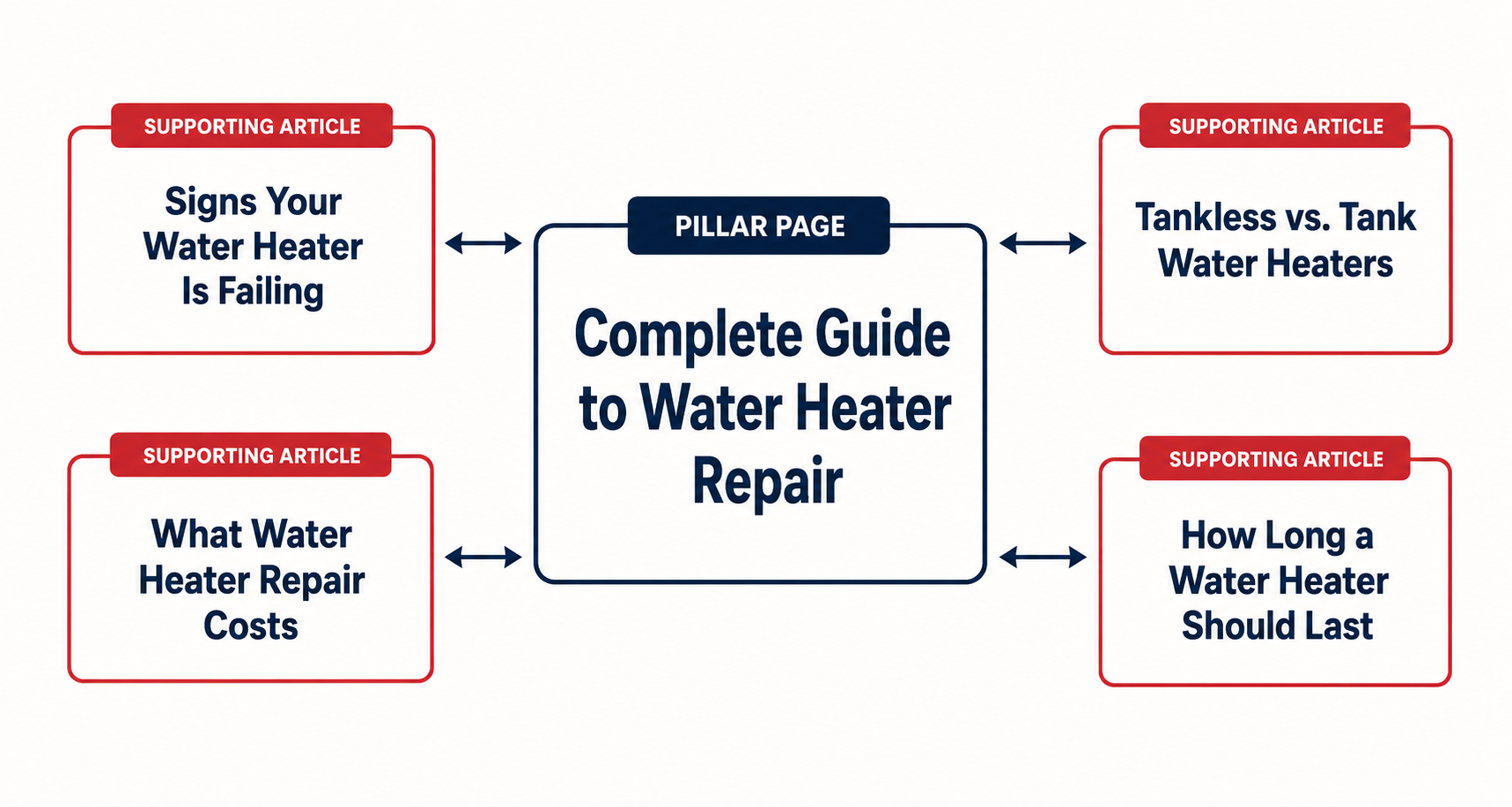
Topic clusters are the backbone of internal linking for AI search. A topic cluster has two parts. One broad pillar page covers a subject at a high level. Several supporting articles each go deep on one piece of it.
The links run both ways. Every supporting article links up to the pillar. The pillar links down to each supporting article. Related supporting pages link across to each other where it makes sense for the reader.
One warning. Google's guide to its AI features states that building separate pages for every possible question, purely to chase AI answers, breaks its spam rules. Clusters work when each page genuinely deserves to exist. They fail when you split one topic into ten thin pages.
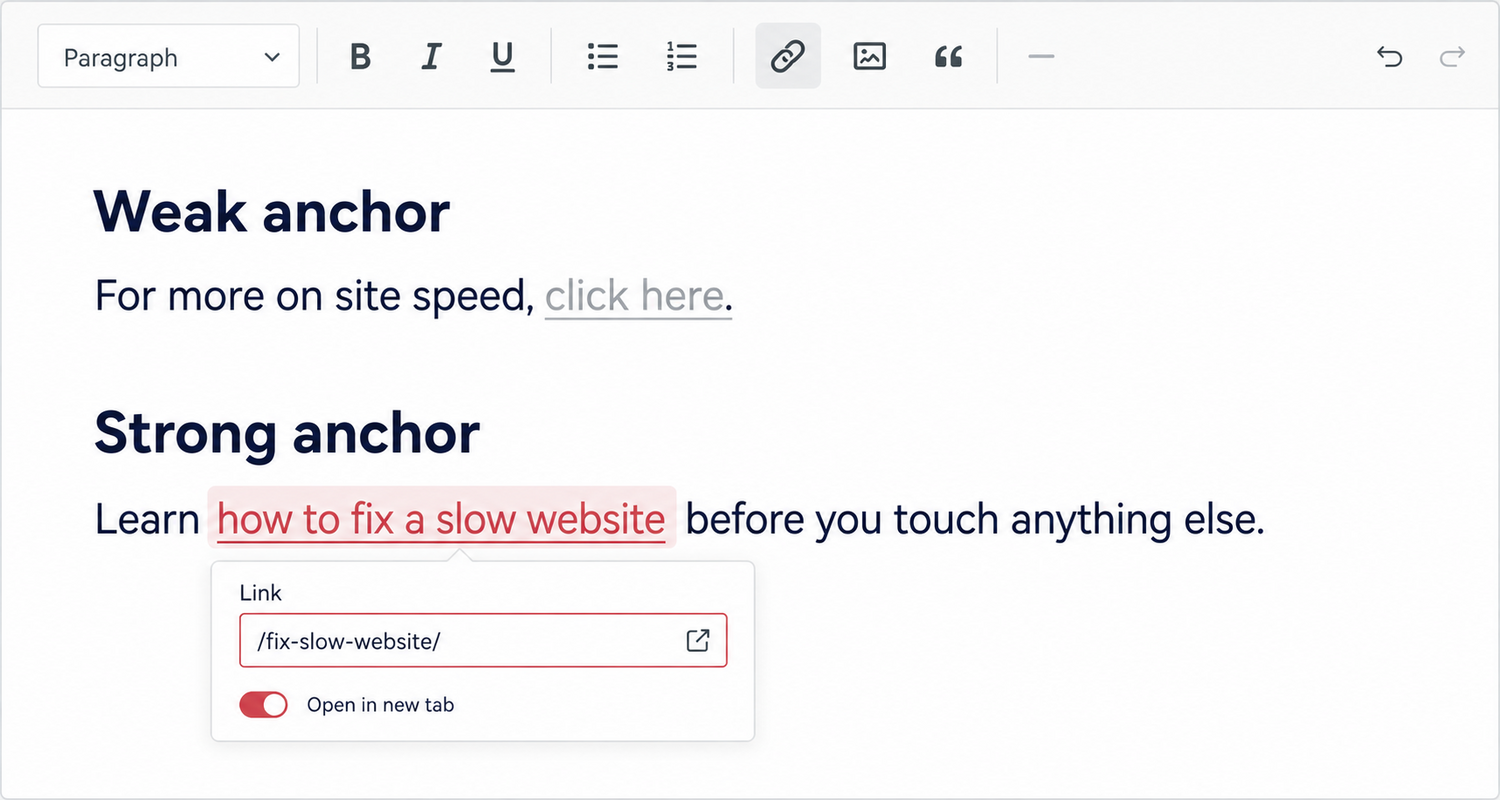
Anchor text is the visible words you turn into a link. It is the strongest clue you give about what sits on the other side.
Weak anchors waste that clue. "Click here," "read more," and "this page" tell a search system nothing.
Descriptive anchors do the work. Compare these two.
The linked words in the strong version describe the destination. That is the whole test.
Two habits matter beyond that. Vary the wording between links pointing at the same page, since twenty identical anchors read as manipulation rather than help. And name the thing itself, using the product, service, or concept a reader would recognize, not a keyword you are hoping to rank for.
This matters more now because AI systems quote passages rather than whole pages. Clear anchors inside a clear passage give them something usable. Our post on structuring content for AI search covers the formatting side of the same problem.
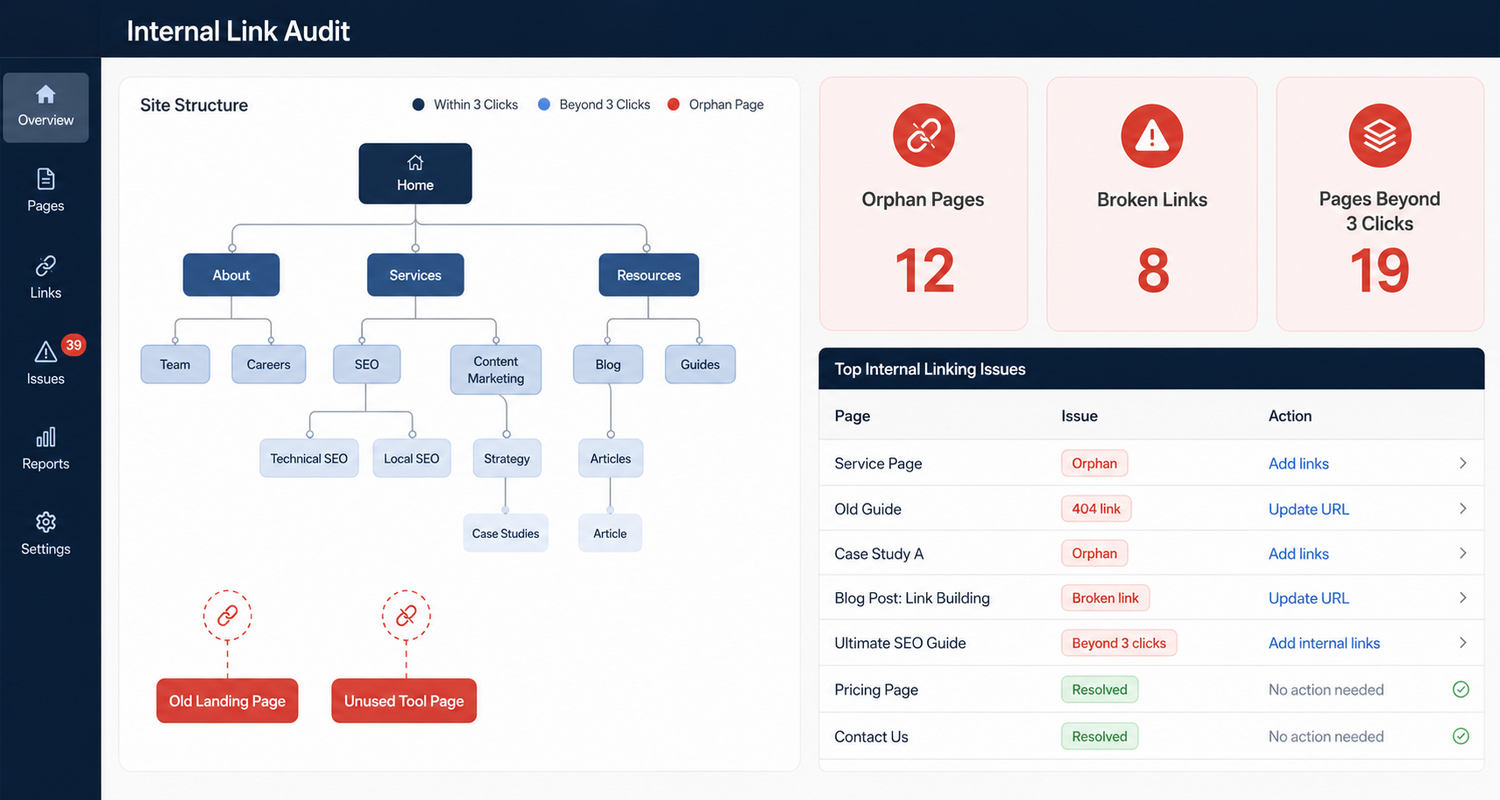
Internal linking only works if the structure underneath it makes sense. Click depth is the number of clicks from your homepage to a given page. Keep the pages you care about within two or three. Anything buried deeper gets crawled less often and treated as less important.
A few structural rules carry most of the weight.
That last point catches a surprising number of sites. If your links only appear after scripts run, crawlers may never follow them. Our technical SEO services cover this alongside speed and crawl issues, because a link nobody can follow does nothing at all.
Set a recurring task instead. Every time you publish, find two or three existing pages that should link to the new one.
Rankings are a slow and noisy way to judge internal linking. These signals move sooner and tell you more.
Check how many pages have fewer than three links pointing at them, since those are your weak spots. Watch whether your important pages get crawled more often. Look at pages per session and whether readers move deeper into a cluster or leave from the first page.
Then check which pages get cited in AI answers. Cited pages tend to be well-connected ones, because connection is part of how these systems judge whether you know a subject. Our post on ranking in Google AI Overviews covers what else feeds that decision.
Good internal linking is built in passes, not all at once. Run a crawl and fix the broken links first, since those are pure waste. Then find your orphan pages and connect them. After that, pick your most valuable topic and build a proper cluster around it before moving to the next one.
Internal linking best practices in AI SEO come down to one idea. Structure is how you show what you know, and AI systems read structure as evidence.
If you want a second opinion on how your site is put together, book a meeting with our team or get in touch for a site structure review.
What are the best internal linking practices for AI SEO?
Build topic clusters with two-way links between pillar and supporting pages. Use descriptive anchor text. Keep important pages within three clicks of the homepage. Fix orphan pages and broken links first.
How does internal linking improve AI search visibility?
AI systems judge whether you cover a subject deeply, not just whether one page is good. Links show which pages belong together, which helps these systems see your site as a credible source.
What is a topic cluster in SEO?
A topic cluster is one broad pillar page supported by several articles that each cover a subtopic in depth. Supporting pages link up to the pillar, and the pillar links back down to each of them.
How many internal links should a page have?
There is no fixed rule. Three to five contextual links per thousand words works for most blog content. Long guides justify more. Relevance matters more than the count.
What is descriptive anchor text?
Descriptive anchor text uses words that explain what the linked page contains. "How to fix a slow website" is descriptive. "Click here" is not, because it gives search engines no clue about the destination.
Why are orphan pages bad for SEO?
Orphan pages have no internal links pointing to them, so search engines struggle to find and crawl them. They also receive no authority from the rest of your site, which limits how well they can rank.
How does website structure affect AI SEO?
Structure shows which pages belong to which subject. A clear hierarchy with shallow click depth helps crawlers reach your content and helps AI systems recognize the topics you cover in depth.
Should internal links point both ways between pillar and supporting pages?
Yes. Two-way linking keeps supporting pages easy to reach and makes the topical relationship obvious. One-way linking leaves either the pillar or the supporting content weakly connected.
Can AI tools help with internal linking?
They help with the tedious parts, like finding orphan pages, spotting broken links, and suggesting relevant pages to connect. A person should still approve each link, since relevance needs judgment.
When should businesses hire an agency for internal linking?
When your site outgrows manual tracking, usually past a few hundred pages, or after a migration creates broken links at scale. Structural problems compound quietly and get expensive to unwind later.


.png)

.png)
.png)

.png)
.png)
.png)





.svg)