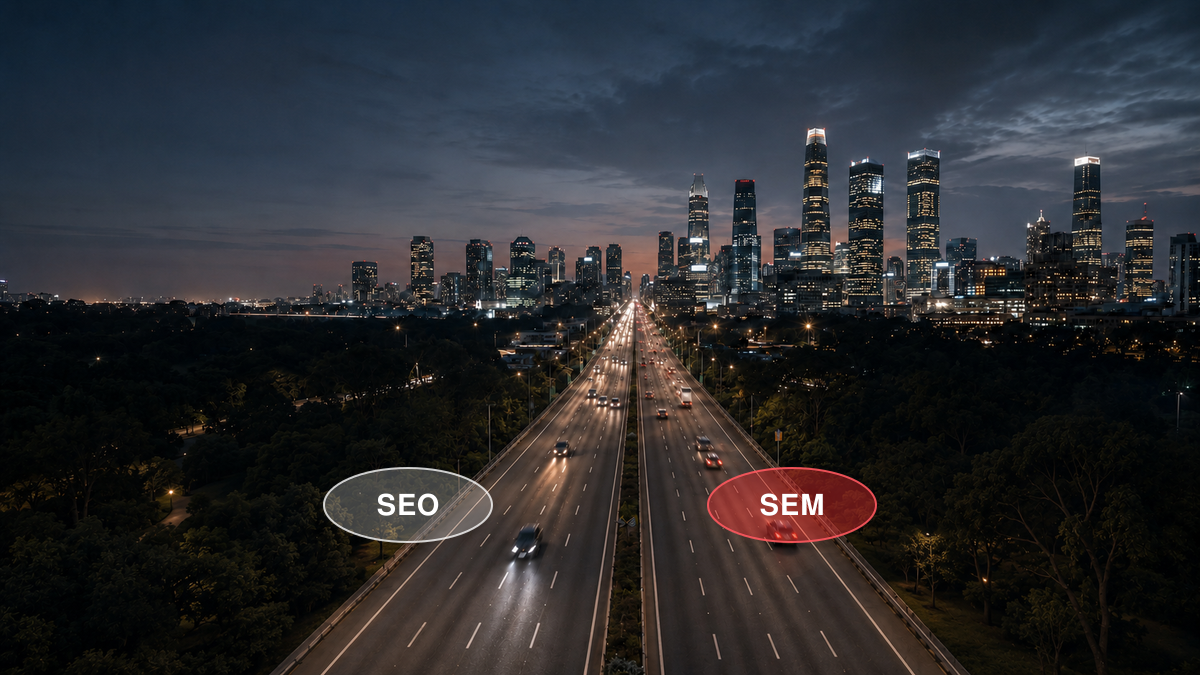
Search has changed, and so has the way businesses show up in it. The old SEO vs SEM debate misses the point, because the two work far better as one plan. At ReachGiant, we build strategies that pull organic search and paid search in the same direction.
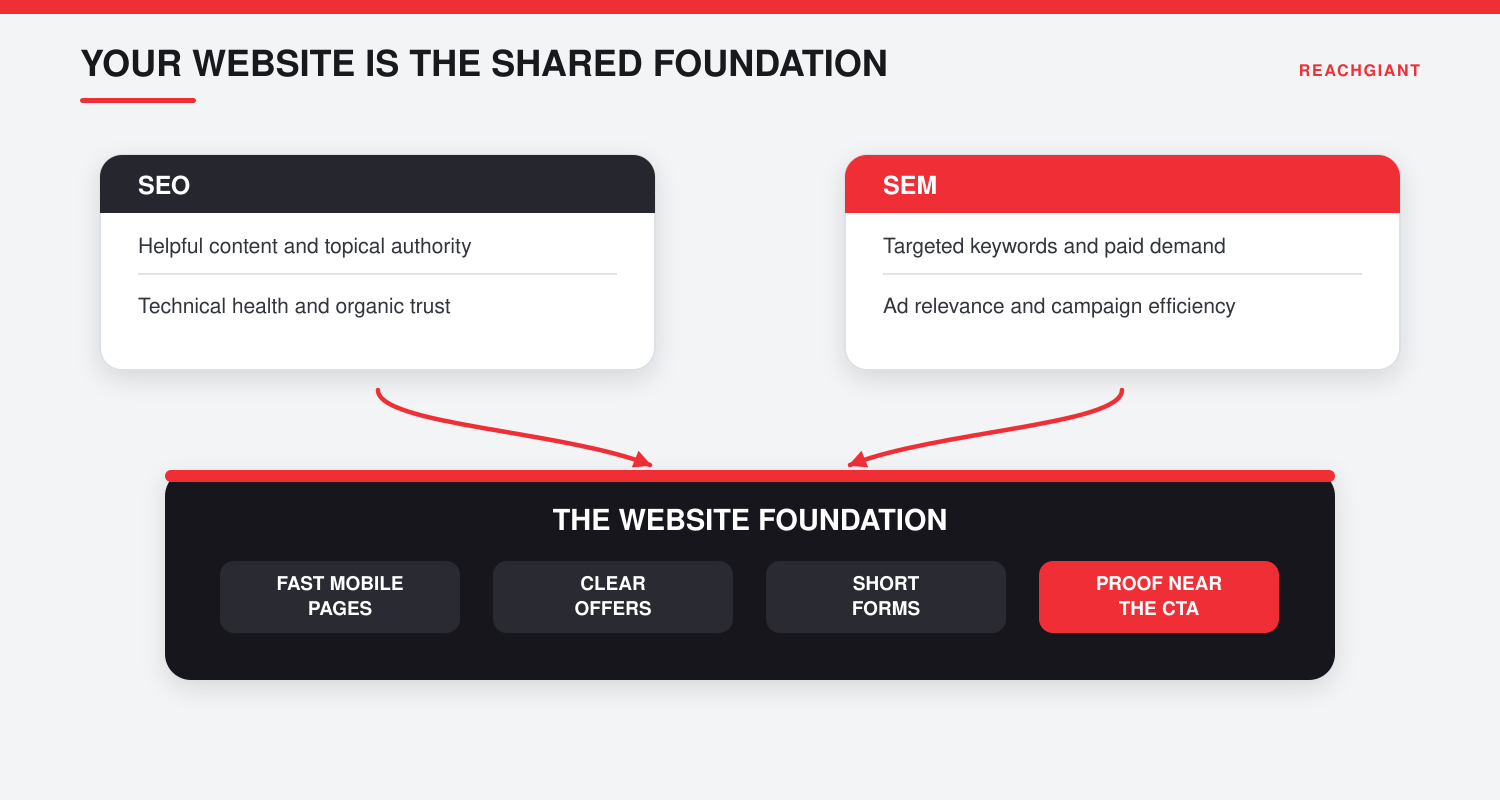
SEO stands for search engine optimization. It is the work you do to earn traffic without paying for every click. That covers your content, your site structure, your page speed, and the links pointing back to your site.
Good SEO answers real questions from real buyers. Search engines now read for meaning, not just matching words. They look at intent, context, and how deeply your site covers a topic. They also weigh trust signals like reviews, author details, and links from respected sites. The Moz beginner guide covers the basics well if you are new to it.
AI answers add another layer. They pull from pages that explain things clearly and back claims with proof. Thin or copied content gets skipped. Our guide on what SEO is and why it matters breaks the basics down further. Our SEO services focus on the parts that hold up, which is why SEO keeps paying off long after the work is done.
SEM stands for search engine marketing. Most people use it to mean paid search, and Google Ads is the biggest piece. You bid on keywords, write ads, and pay when someone clicks.
The upside is speed. A campaign can send traffic the same day it goes live. You control the budget, the keywords, and the pages people land on. You can also see exactly what each lead costs you.
The catch is simple. Traffic stops when the spending stops. SEM does not replace SEO, and SEO does not replace SEM. That is the honest answer to SEO vs SEM for most businesses.
The SEO vs SEM comparison usually breaks down right here. One builds an asset you own. The other buys attention you rent. Most companies need both, in different amounts, at different stages of growth.
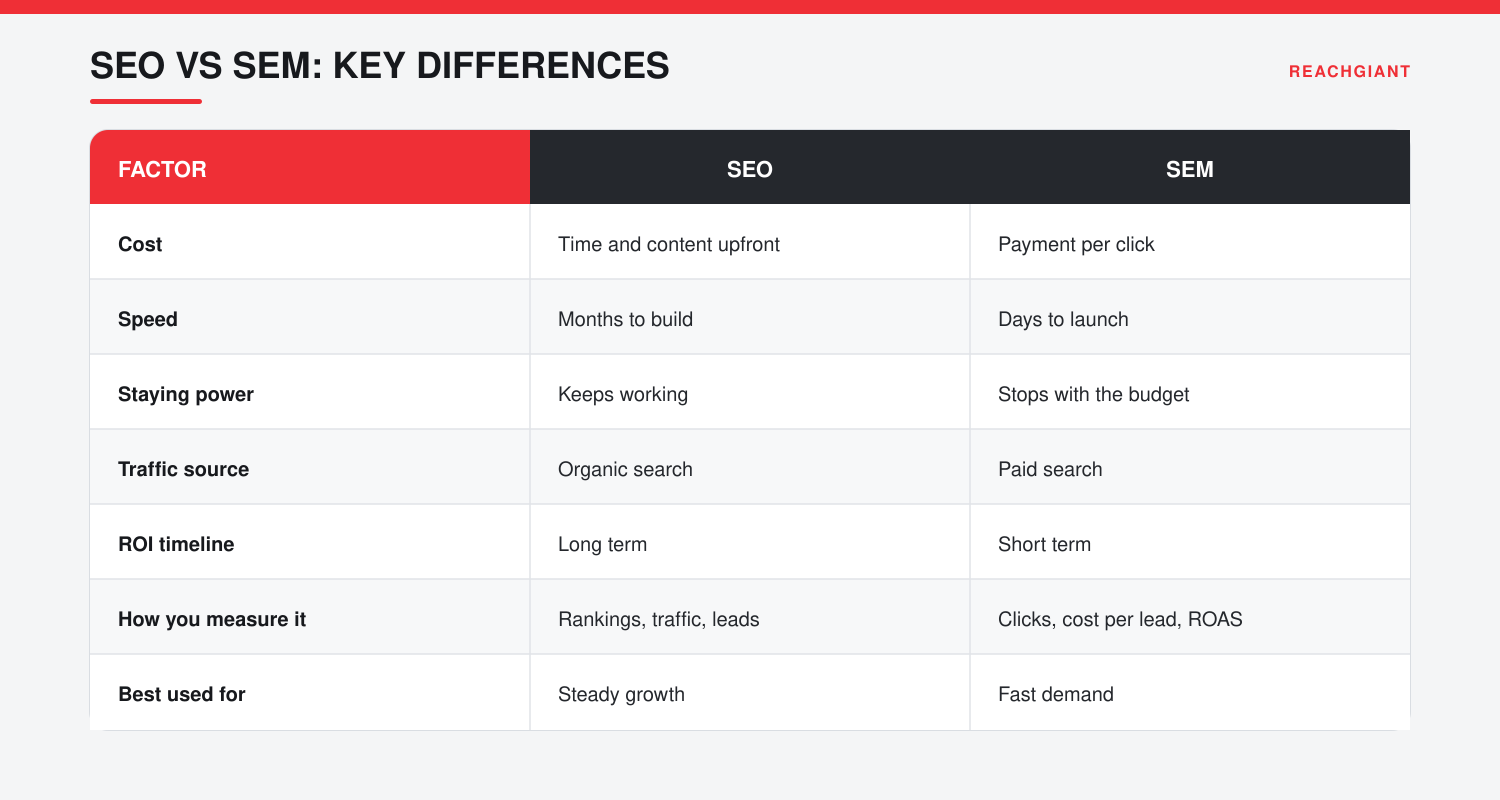
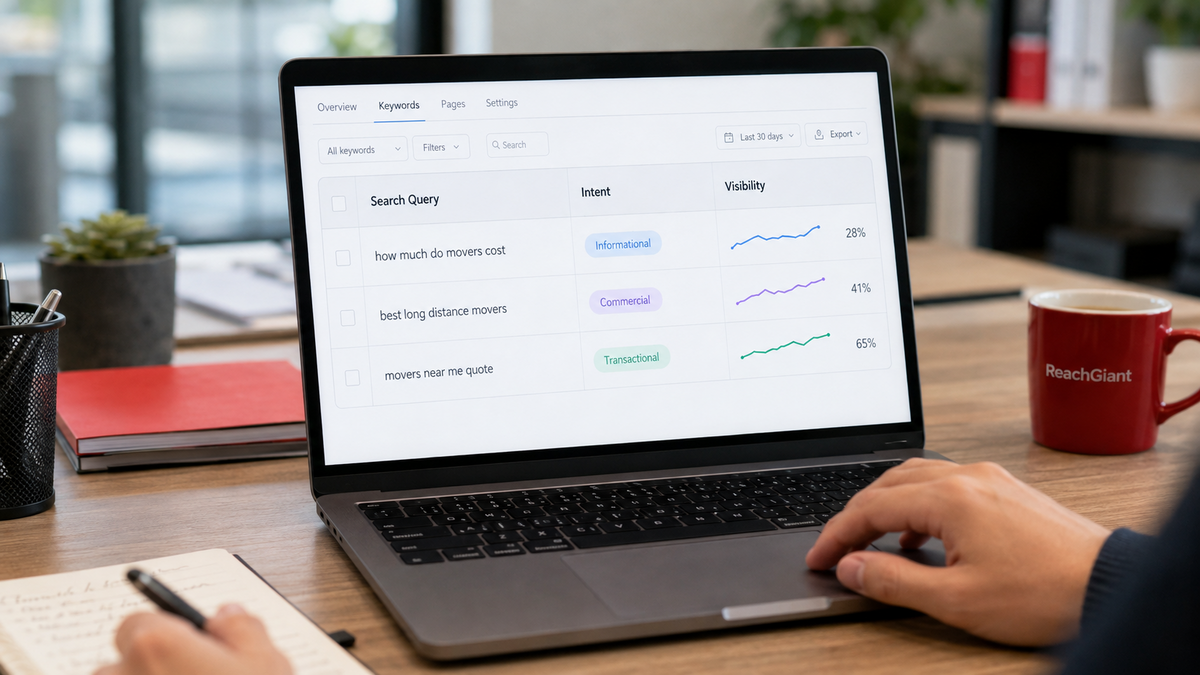
Google Ads shows you which keywords bring buyers, not just visitors. You see the exact search terms that turn into calls and form fills. Many of them are long tail keywords worth building pages around. That takes guesswork out of your content plan. You can also test headlines in ads before you commit to a full page.
Google scores how well your landing page matches the search behind the click. Better content, faster pages, and a clearer offer all raise that score. A higher score lowers your cost per click and lifts your ad position. The same budget then buys you more traffic.
AI search tools pull from sources that look credible across the web. Brand mentions, reviews, and helpful content all feed that judgment. Paid search keeps you visible while your organic rankings build. People who see your name twice on one results page tend to trust it more. Our breakdown of what it takes to rank in Google AI Overviews goes deeper on this. Search Engine Journal tracks how fast these habits are shifting.
SEO vs SEM stops being a choice once you see the loop. Each side feeds the other with data, trust, and reach. Run them in separate silos and you pay twice for lessons one of them already learned.
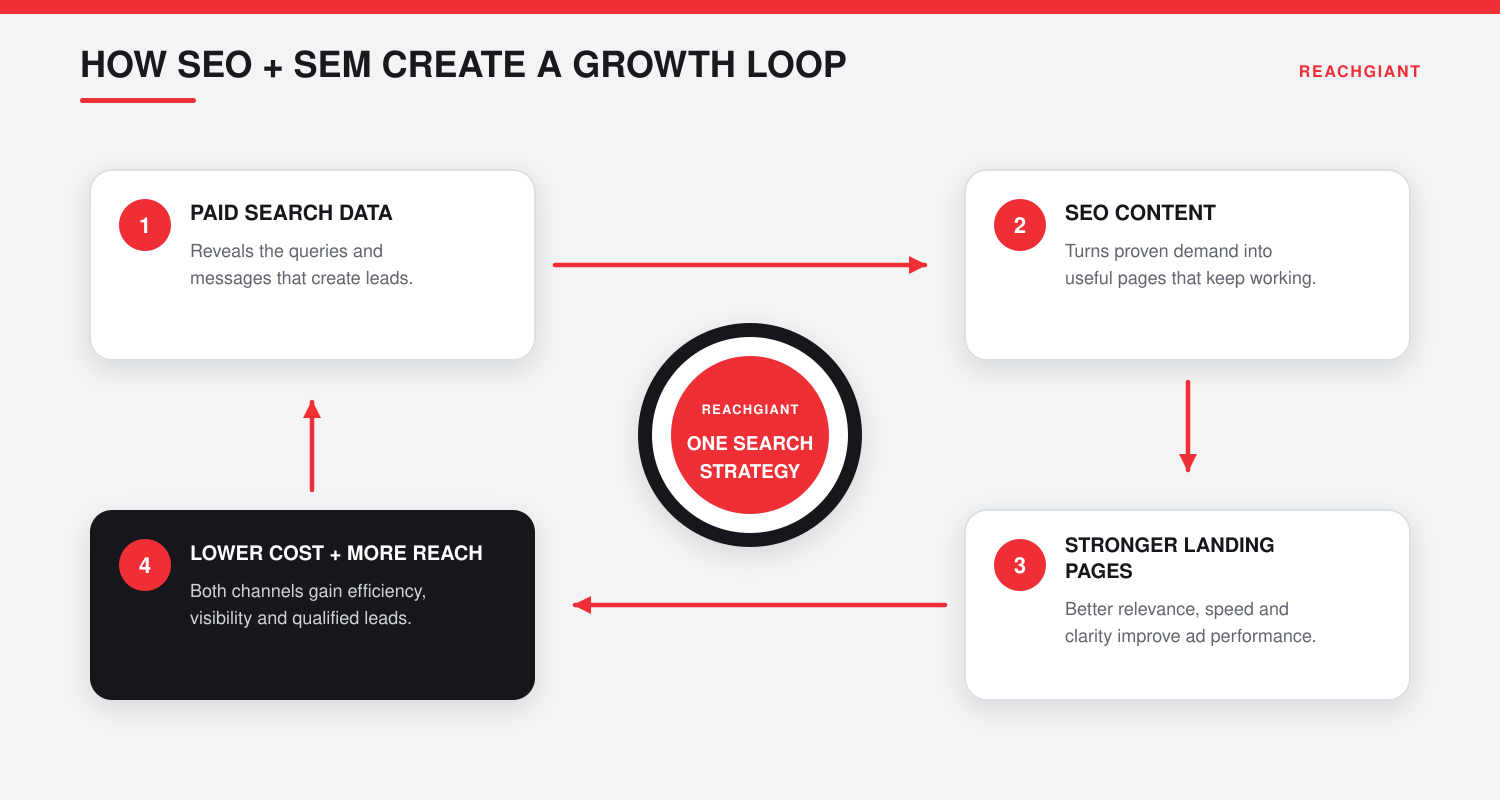
Both channels send people to the same place. If that place is slow or confusing, the money leaks out. A site that takes five seconds to load loses visitors before they read a word.
Focus on a short list of basics. Pages should load fast on phones. Forms should be short. Buttons should be easy to spot. Proof like reviews and case studies should sit close to the ask.
Small fixes here often beat big spending elsewhere. Cutting load time by two seconds can lift form fills across every channel at once. The same page powers your rankings, your ads, and your referral traffic. That makes it the cheapest thing on your list to improve.
This is the gap most SEO vs SEM articles skip. Your website is the shared foundation under both channels. Fix it first, and everything else starts performing better.
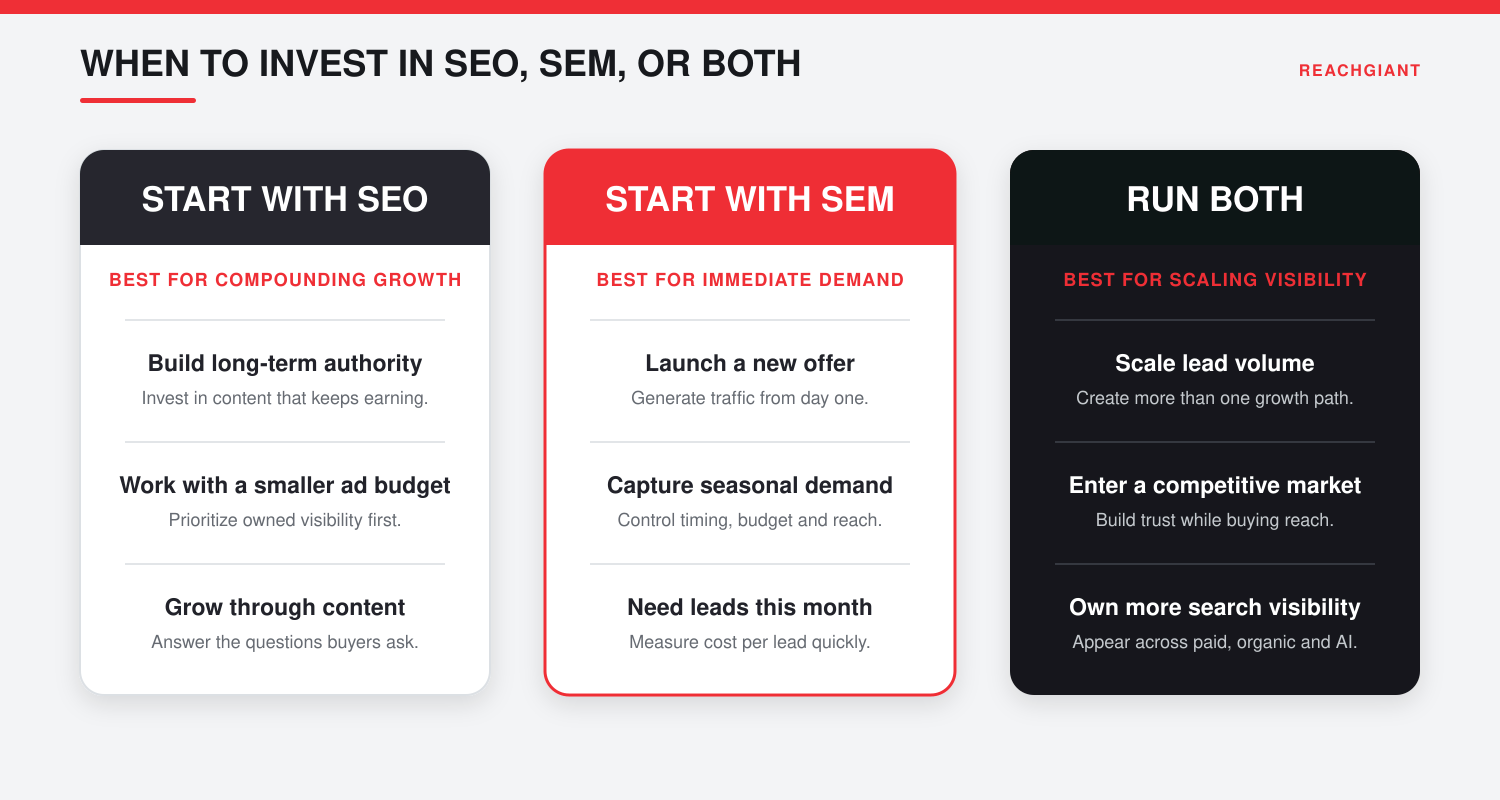
Start with SEO if you are
Start with SEM if you are
Run both if you are
In our experience, most growing companies land in the third group within a year. They start in one lane, hit a ceiling, and add the other to keep going. The mix shifts over time as organic traffic grows and ad spend gets more selective.
The answer to SEO vs SEM is rarely one or the other. AI has changed how people search, not the need to be found and trusted. Organic search builds an asset you keep. Paid search brings in demand you can measure today. A fast, clear website makes both of them worth more.
If you want a second opinion on where your money should go, book a meeting with our team. You can also get in touch for a quick look at your current setup.
What is the difference between SEO and SEM?
SEO earns traffic through unpaid search results. SEM buys traffic through ads like Google Ads. SEO takes longer but lasts. SEM works fast but stops when you stop paying.
Is SEO still effective in the age of AI?
Yes. AI tools still pull answers from web pages. Clear, helpful, well-structured content gets cited more often. The work has shifted toward topics and intent instead of single keywords.
How do SEO and Google Ads work together?
Ad data reveals which keywords bring real buyers, which guides your content. Better content raises your ad quality score, which lowers your cost per click. Each one lowers the cost of the other.
Should small businesses invest in SEO or SEM first?
It depends on your timeline. If you need leads this month, start with ads. If you can wait a few months for cheaper traffic, start with SEO. Many owners run a small mix of both.
Does AI replace traditional SEO?
No. AI changes how results get shown, not the need for good pages. Sites that load fast, answer questions clearly, and earn trust still win. The basics matter more now, not less.
How long does SEO take compared to Google Ads?
Google Ads can bring clicks within a day. SEO usually takes three to six months to show real movement. Competitive markets can take longer, depending on your site and your content.
Can a better website improve both SEO and PPC performance?
Yes. Faster pages and clearer layouts help rankings and raise ad quality scores. Better conversion rates mean every visitor is worth more, no matter which channel sent them.
What role does user intent play in AI search?
Intent is the reason behind the search. Search tools now match meaning, not just words. Pages that answer the real question behind a query get shown and cited far more often.
Why should businesses combine SEO, SEM, and website work?
Each one covers a weakness in the others. Ads bring speed, SEO brings staying power, and a good site turns both into leads. Running them apart wastes budget on all three.
How can a digital marketing agency help improve online visibility?
An agency brings the data, tools, and process to run all three at once. That means less testing on your own budget and faster results from the money you already spend.


.png)

.png)
.png)

.png)
.png)
.png)






.svg)