
Keyword research used to end with a spreadsheet of phrases and search volumes. That list still has a use, but it no longer tells you what to publish. At ReachGiant, we build an AI keyword ranking strategy around topics and buyer questions instead, because that is how search systems now read a website.
An AI keyword ranking strategy plans your content around topics and search intent rather than a list of exact phrases to repeat.
The change is in how search works. These systems match meaning, not spelling. A page about "water heater not heating" can surface for "why is my hot water cold" without containing those words, because both questions point at the same problem.
AI answers push this further. Google splits a complex question into several smaller searches, runs them together, then builds one answer. Your page can get pulled in for a sub-question you never put on your list.
Our post on AI keyword ranking tools covers how tracking software handles this shift.
So the unit of planning moved. It used to be the keyword. Now it is the topic, and the keywords are just the different ways people ask about it. An AI keyword ranking strategy starts from that shift.
Topic clusters are the backbone of any AI keyword ranking strategy. A cluster has one broad pillar page and several supporting articles, each covering one part of the subject in depth. Supporting pages link up to the pillar. The pillar links back down to each of them.
Here is what that looks like for a moving company.
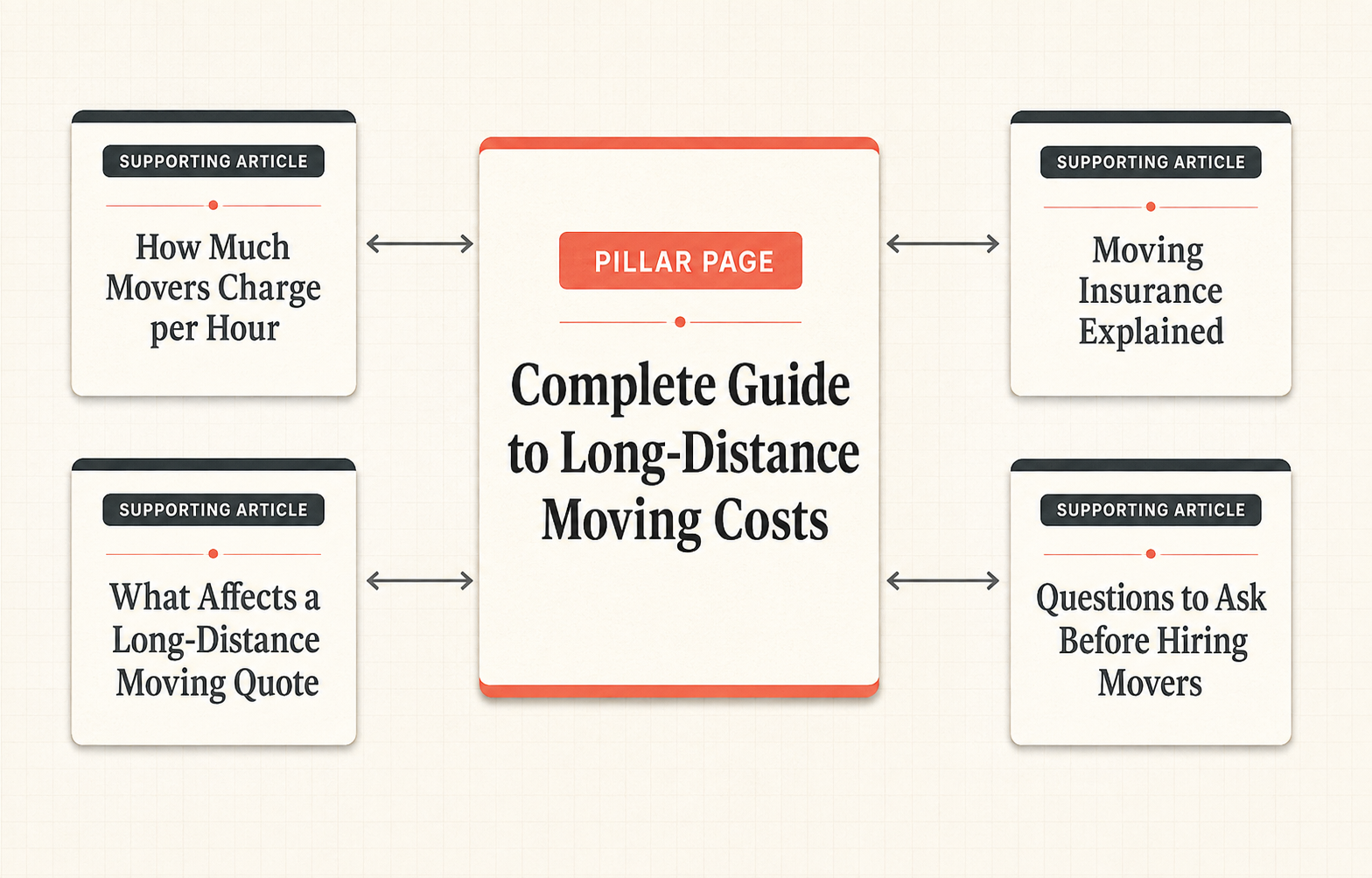
Depth is the point. A site covering a subject from eight angles has eight ways to be found. One long article has one.
There is a limit worth knowing. Google's guide to AI features states that creating separate pages for every possible question, purely to chase AI answers, breaks its spam rules. Clusters work when each page deserves to exist on its own.
Long-tail keywords do the heavy lifting in an AI keyword ranking strategy. They are longer, more specific searches that carry less volume and far more buying signal.
They matter more now because people type full questions into AI tools instead of two-word fragments. Those conversational searches are long-tail by nature, and they are usually easier to rank for.
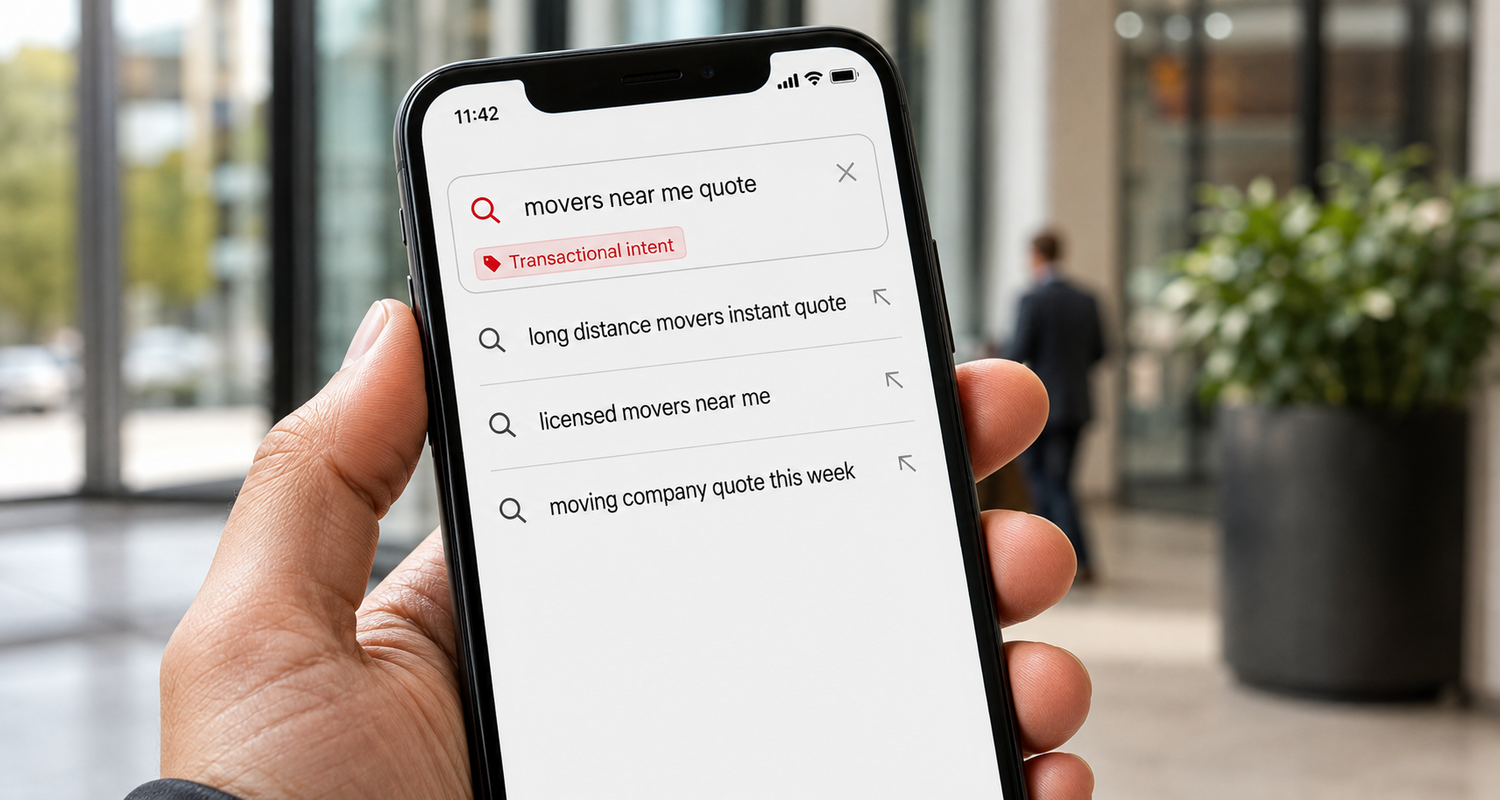
Sort what you find by intent rather than volume.
Matching intent is the step most people skip. A blog post will not rank for a term where Google shows only service pages, no matter how well written it is.
Your best source of question keywords is usually not a tool. It is your inbox, your support tickets, and your sales calls. Our post on structuring content for AI search covers how to turn those questions into pages.
An AI keyword ranking strategy fails at this step more than any other. Once you know the topic, structure decides whether you get used.
Answer first, explain second. Put a clear two-sentence answer under every heading, then expand underneath. AI systems quote passages, not whole pages, so a buried answer gets skipped.
Use scannable formats. Tables for comparisons, bullets for lists, and an FAQ block for the questions buyers actually ask.
Add something nobody else has. Original numbers, customer stories, and specifics from your own work. Google's helpful content guidance asks whether a page brings real value beyond what already exists. Pages that repeat what ten others said get skipped by AI tools for the same reason.
Cover the related terms. Not by stuffing them in, but by writing the way an expert would. If you explain moving costs without mentioning insurance, deposits, or peak season pricing, the coverage looks thin.
That fifth point causes the most damage over time. Pages sitting alone with nothing linking to them rarely recover, which is why our AI SEO services treat linking and content planning as one job.
Judging an AI keyword ranking strategy on rankings alone will mislead you, because a page can lose clicks while gaining visibility.
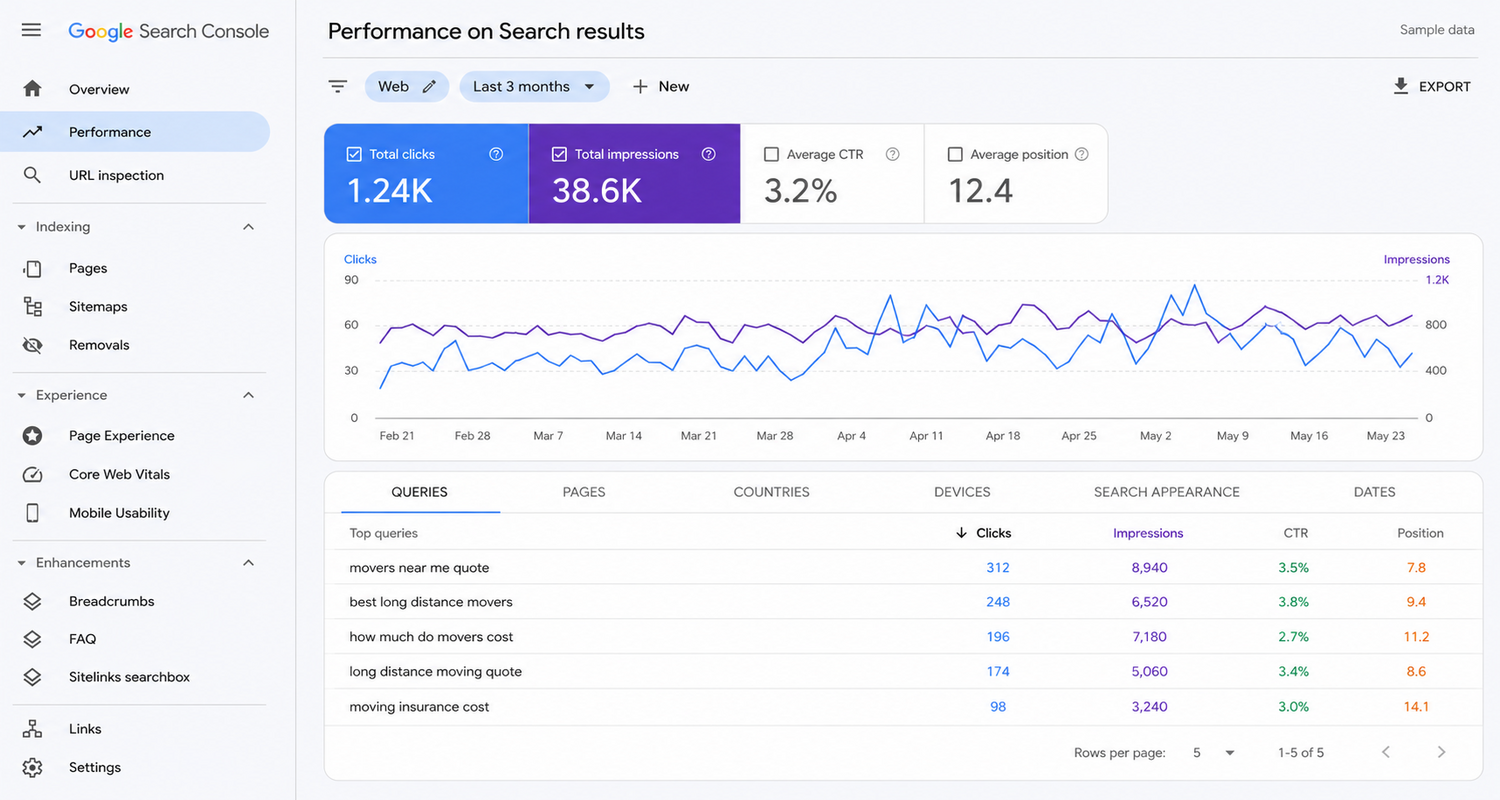
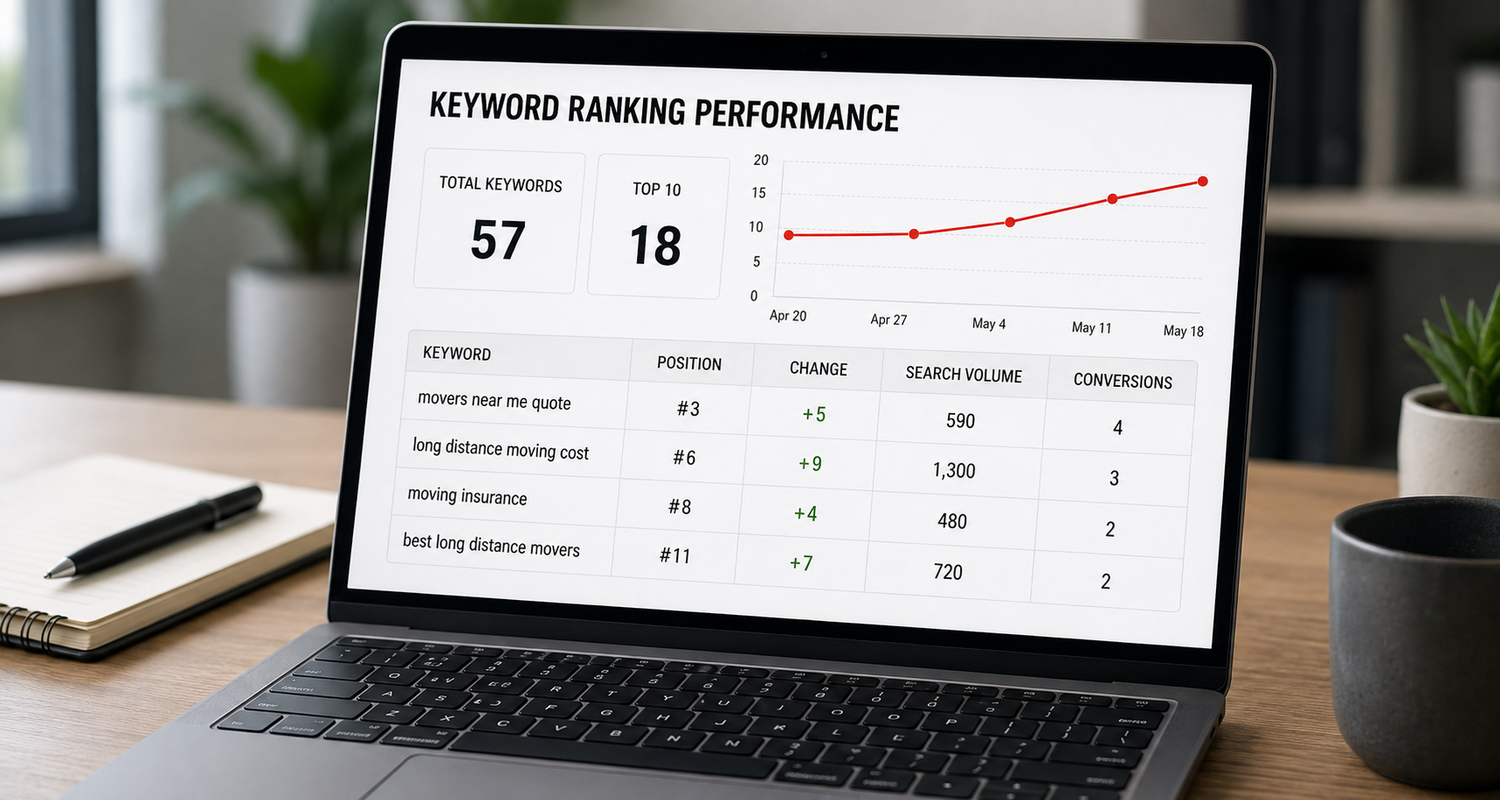
Track how many keywords each cluster ranks for rather than the position of one term. Watch organic impressions, which often climb while clicks stay flat. Check which pages get cited in AI answers, and which never do.
Then check conversions by page. A cluster ranking for fifty terms that generates no enquiries is aimed at the wrong intent, and the fix is usually revisiting the long tail terms behind it.
Pick one topic that matters to your revenue. List every question a buyer asks about it, then check what already ranks for each. Build the pillar first, then the supporting pages, and link them properly.
One finished cluster beats twenty scattered posts. That is the whole of an AI keyword ranking strategy in practice. Build one properly, then move to the next topic.
If you want help planning this, book a meeting with our team or get in touch for a keyword review.
What is an AI keyword ranking strategy?
It is a plan built around topics and search intent rather than a list of exact phrases. The goal is covering a subject deeply enough that search systems treat your site as a credible source on it.
How does AI change keyword research?
Search systems now match meaning instead of exact wording, and one question triggers several searches behind the scenes. That makes topic coverage more valuable than targeting individual phrases.
What is semantic keyword clustering?
It is grouping keywords by the meaning behind them rather than by shared words. Searches asking the same thing in different ways belong on one page, not on separate near-duplicate pages.
Why are long-tail keywords important for AI SEO?
People type full questions into AI tools rather than short fragments, so most AI searches are long-tail. These terms also carry stronger buying signals and face less competition.
How do topic clusters improve rankings?
Clusters let one subject be covered from many angles, giving you more ways to be found. The internal links between pages also show search systems which content belongs together.
Does keyword density still matter?
No. Repeating a phrase a set number of times has not been a ranking factor for years and now looks like spam. Cover the topic properly and the relevant terms appear naturally.
What role does search intent play?
Intent decides what type of page can rank. Search your target term and look at the results. If they are all service pages, a blog post will not compete regardless of quality.
Can AI tools replace keyword research?
They speed up clustering, grouping, and gap analysis. They cannot tell you which terms matter to your business or read your customer conversations. Judgment still comes from a person.
How long does a keyword strategy take to work?
Expect three to six months before a new cluster shows real movement. Competitive markets take longer. Existing pages that get restructured often improve much sooner.
When should businesses hire an SEO agency for this?
When the plan outgrows a spreadsheet, usually once you are managing several clusters at once, or when traffic has plateaued and you cannot tell which keywords are worth pursuing.


.png)

.png)
.png)

.png)
.png)
.png)





.svg)